Why the Floor Crew Owns the Target Process Decision in Plant AI Deployments
Operators hold the evidence on whether a process can support AI.
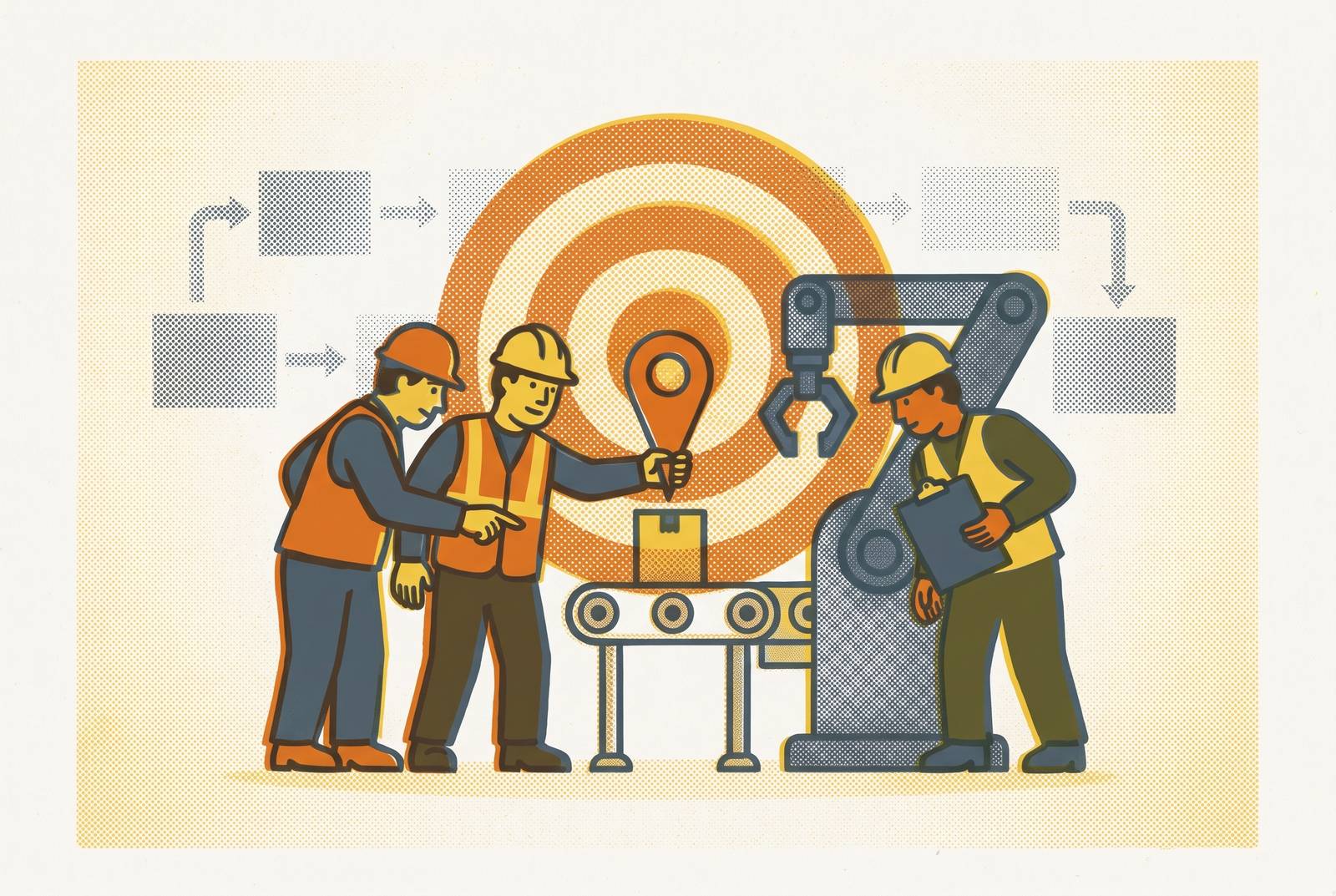
Manufacturers in asset-heavy industries can start AI operations transformation without a platform strategy by choosing one broken process and checking whether it can support AI as it runs today. The floor crew owns that readiness judgment because it holds the evidence of how the work actually runs. Leadership still decides commercial priorities, but choosing a process for the portfolio does not prove that it is ready.
Why process selection is the decision that determines whether a plant AI deployment succeeds or fails
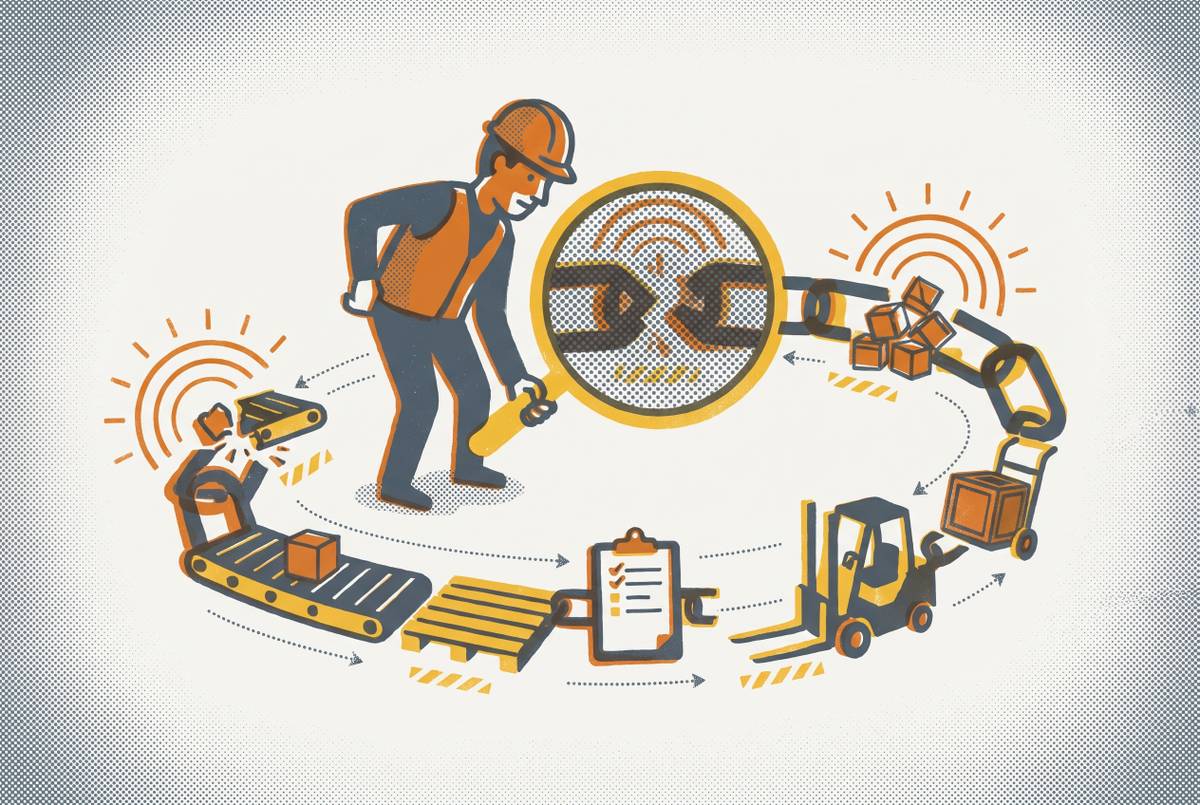
Choosing which process goes first commits a deployment to the data, exceptions and working conditions of that process. If those foundations cannot support AI, even a capable model cannot make up for them. Automating an already broken process accelerates its breakdown. The initial selection is therefore more than a choice of pilot scope. It can become the failure that stops a deployment program before it scales.
The pilot-to-production gap describes this risk in operational terms. A project can look strong in a pilot and collapse in production because the workflow underneath it was never correctly understood. The model need not be the weak point. Clean data, documented exception paths, consistent tagging and repeatable inputs are preconditions for selection. When they exist in the declared process but not in the field, the deployment rests on conditions the plant does not actually provide.
Discovering that mismatch after deployment is far more expensive than finding it beforehand. It also changes the nature of the work. What appeared to be an AI implementation becomes an effort to understand and repair the underlying process. Treating the wrong target as a recoverable pilot mistake understates the risk, because production can sustain what the pilot appeared to demonstrate only if the selected process supports it.
How plant AI decisions actually get made today, and where they go wrong structurally
The dominant selection path runs from strategy through IT and operations leadership, often reaching the floor only at rollout. That path follows an established organizational design. Most manufacturing organizations were built around sequential, departmental work, with planning handing off to production and production to maintenance. The same structure now shapes decisions about where AI should enter the work, even though the evidence needed for those decisions does not follow departmental boundaries.
This is a structural problem. The hierarchy was designed to coordinate responsibilities and decisions. As a target proposal moves upward, process maps and declared plans become substitutes for direct operational evidence. The decision-maker sees a representation of the work. The people navigating its exceptions may have no role in deciding whether that representation is adequate for deployment.
As a result, a process can become attractive for reasons that are real but insufficient. High data availability suggests tractability, apparent standardization suggests repeatability, and strategic visibility makes the project easy to justify. None establishes that inputs are consistent in use or that exception paths have been understood. A well-documented candidate can still be operationally fragile. Conversely, the process most in need of rebuilding may be difficult to recognize from the information that reaches the selection committee.
When the floor crew joins only as implementation begins, the original assumptions go unchecked until operators come up against them in their work. By then, the process has already been chosen. Frontline involvement at rollout cannot perform the same function as frontline authority over readiness before commitment.
What the floor crew knows that no one above them can reliably reconstruct
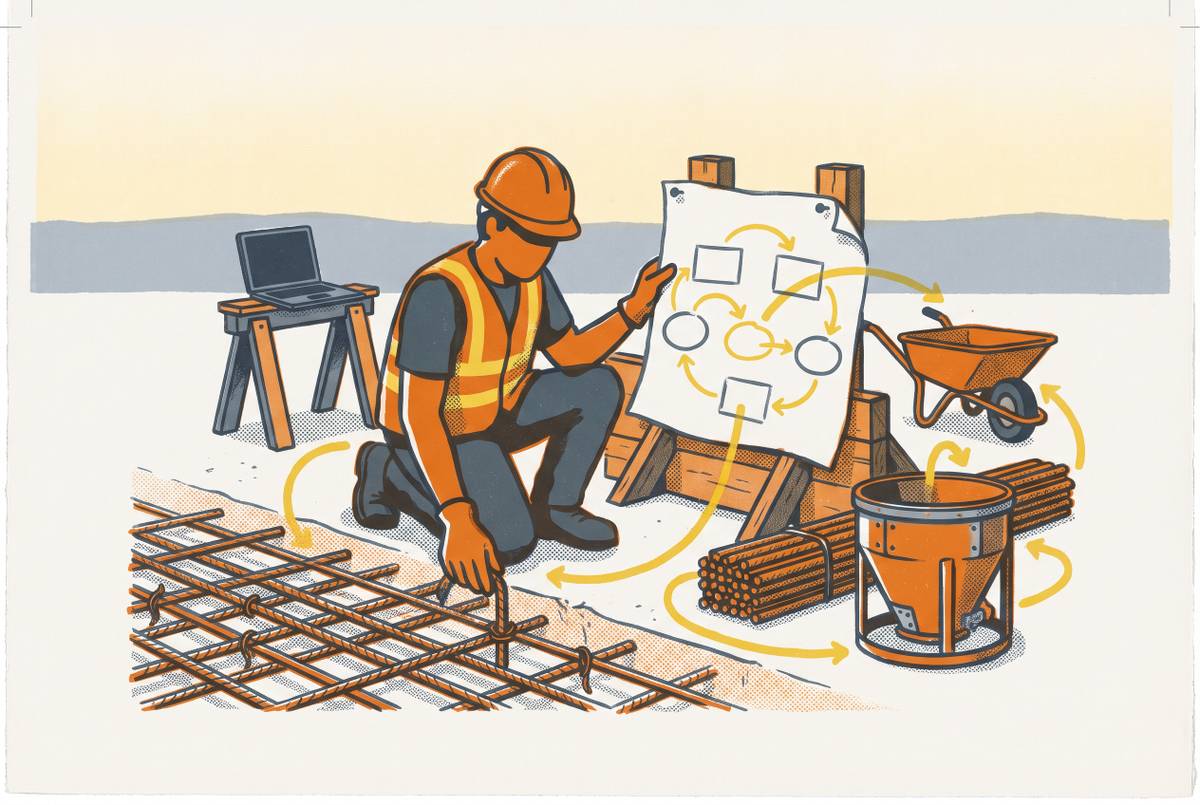
Operators know how the live process departs from the documented process because they work through those departures. A process map records the intended sequence. It does not reliably show the exception paths, workarounds, informal coordination and problems with input quality that people deal with every shift. Those details are part of how the process produces an output under actual conditions.
A declared sequence may show that one step follows another without explaining the judgment needed to make that transition. Operators know where those decisions occur and what information is missing or inconsistent. The written workflow can describe the planned handoff without showing that the conditions it needs are in place. A dashboard or vendor demonstration cannot take the place of evidence of how people close that gap as they work.
Daniel Bruck LaCour, writing about print and packaging operations, first asks, “What part of the production process is currently broken, with or without AI? That question changes the basis of selection. Answering it requires knowing what triggers the job, where people make decisions and where the process fails. These are facts about the work. The people delivering the output are the direct source of that evidence.
This knowledge can be gathered, but it cannot be reconstructed reliably from declared plans alone. Effective process auditing distinguishes a control that is documented from one that operates as intended. It requires inspection of live processes, interviews with the people running them and testing under real conditions. A written control is only the starting point.
Agentic deployments make that distinction particularly consequential because the agent must operate within the workflow. Missing workflow constraints, execution-path deviation and environment misjudgment are named failure modes rooted in missing operational context. Capability alone does not supply that context. An agent built around the declared process encounters the exceptions and dependencies of the actual process, where the coherence of its design can break down.
Why the standard objection — that operators know their station, not the portfolio — does not hold for this decision
The strongest objection to floor ownership is legitimate. An operator can know a station well without being able to compare processes across facilities, compare their ROI or judge how well a technology fits across a portfolio. Operations leaders must weigh those questions. Local knowledge does not confer authority over every investment decision, and a process can be painful to operate without being the strongest commercial priority for AI.
Assessing a specific process’s readiness means checking for the data quality, documented exceptions and dependable preconditions needed to support an AI agent. It requires evidence from the field. A favorable position in a capability matrix cannot establish that the inputs are stable or that the work can proceed without informal coordination missing from the design.
Leadership decides which outcomes to invest in and how the competing opportunities rank on commercial grounds. The floor crew establishes whether the conditions claimed for a candidate process match the conditions under which it runs. Neither judgment replaces the other. A commercially attractive candidate may still be disqualified by inconsistent data, undocumented dependencies or exception volume that the selection exercise did not expose.
Floor ownership of readiness is therefore narrower than ownership of the portfolio, but stronger than consultation. Evidence from operators must be able to change which process is chosen, rather than just shape how it is put in place after the choice is made. Giving the crew that authority does not ask it to take over governance or enterprise technology selection. It places the judgment about the work with the people able to substantiate it, while preserving leadership’s responsibility for commercial priorities.
What excluding frontline workers from the AI design process has produced in documented deployments
The reported pattern across manufacturing and adjacent industries connects frontline exclusion with adoption and governance failures. The evidence identifies a consistent mechanism while leaving open other causes of stalled deployments. When AI is designed above the floor and handed down, operators receive a change to their working conditions without the context or route needed to challenge where it does not fit.
That exclusion removes operational evidence at the point where it could correct the design. Operators may know that an input the design relies on is inconsistent or that an exception needs people to coordinate, yet rollout starts before those conditions are dealt with. Adoption then involves more than learning a new system. Workers must reconcile the imposed workflow with the process they are responsible for running, while lacking a means to challenge the assumptions behind it.
Adjacent retail deployments show the same organizational pattern. Programs designed at the centre and delivered to frontline workers without a route to challenge them have produced adoption and change-capacity failures identified in post-mortems. Central design can exclude the knowledge needed to judge whether a change fits the work. In manufacturing, that gap includes the inputs, constraints and exception paths on which an agent depends.
Gartner has predicted that by 2027, a substantial share of enterprises will demote or decommission autonomous AI agents because of governance failures. Analyst Shiva Varma has identified binary treatment of agent trust, either locked down or fully trusted, as the root cause. Calibrated trust requires more than a permission decision. It depends on accurate knowledge of where an agent operates and which conditions constrain its actions. Leaving the floor crew out weakens that foundation, so a failure when choosing the process can later force the agent to lose authority or be withdrawn.
How to start with one broken plant process without buying a whole platform
Starting on the floor is a structured evidence-gathering exercise. An operations leader who wants to improve the work without first committing to an enterprise software strategy can start with a process audit. Its purpose is to establish what needs rebuilding and whether AI has viable conditions in which to operate. A digital roadmap does not answer those questions. Nor does selecting a platform establish that a particular workflow is ready.
LaCour’s framing calls for finding what is broken, whether or not AI is used in the end. Operators can then show what triggers the job, where human decisions enter, where the process fails and what getting the output right means in practice. This gives the investigation a concrete object. It also prevents selection from beginning with a technology capability and searching for a process that appears to fit it.
To establish readiness, that account must be tested against live conditions. Structured fieldwork includes observing the process, interviewing the operators responsible for each step about where controls break and testing whether inputs are as clean and consistent as the process map assumes. Documentation remains useful as the declared baseline. The audit establishes where execution departs from it and whether those departures have been understood well enough to support deployment.
The audit distinguishes processes with data integrity, documented exception paths and stable inputs from those whose foundations still need rebuilding. That distinction gives leadership evidence for a commercial choice. It also allows the crew’s knowledge to rule out an attractive but fragile candidate before the cost of deployment has been incurred.
The lesson for operations leaders is to put that audit before the target decision. Operators must show exactly how the process runs today and where it hurts. This is the practical form of floor authority.