Audit Sequence for Logistics Operations Before Any AI Tool Gets a Scope of Work
A five-phase field audit shows what to fix before scoping AI.
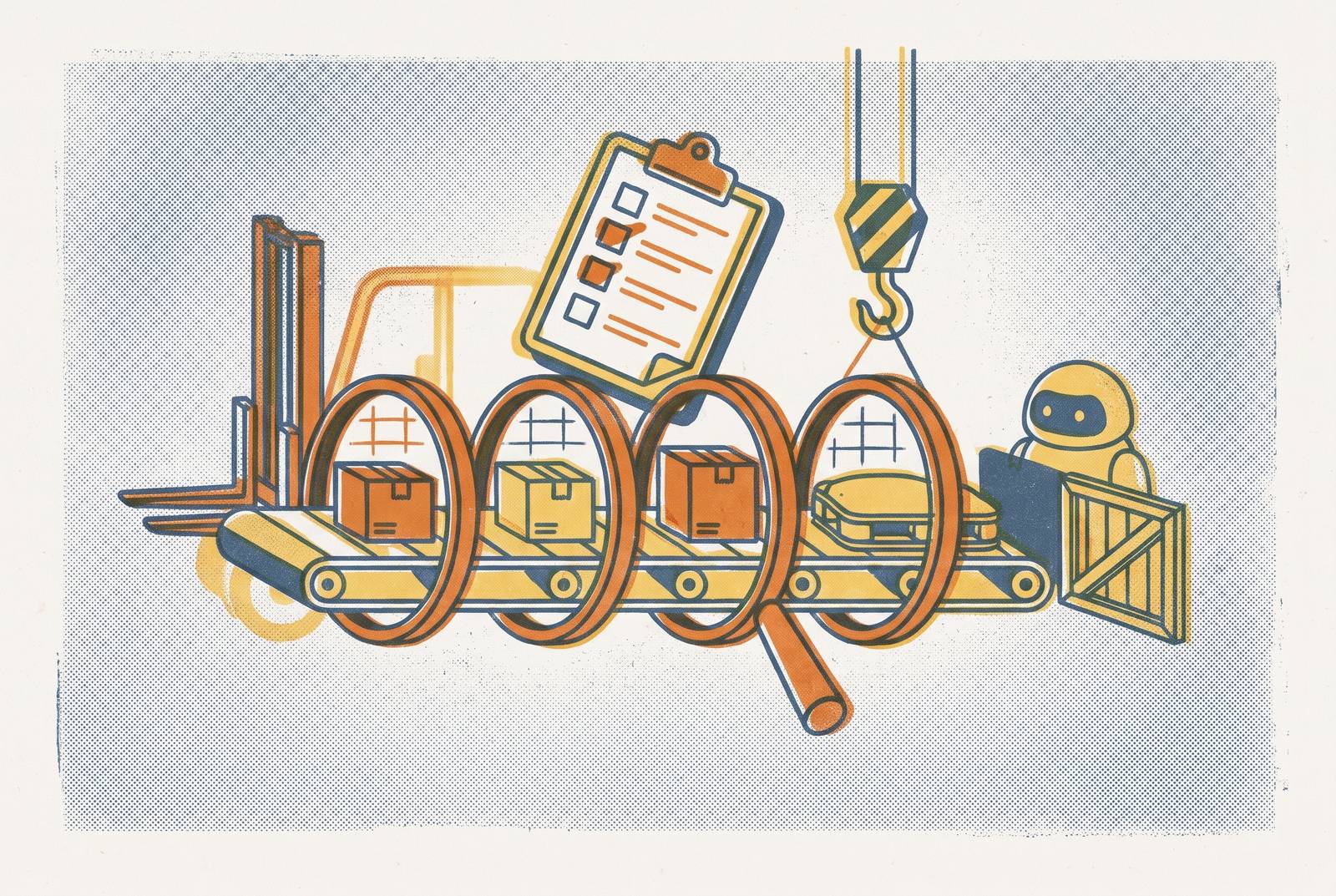
Before any AI tool receives a scope of work in logistics, operations leaders must audit the work as it happens. The sequence is to establish costs, map field decisions, trace data, define decision rights, and then select a deployment target. Scoping before that reconciliation encodes existing dysfunction into the solution.
Why scoping AI before auditing logistics operations encodes dysfunction into the solution
The sequence goes wrong when written procedures become design requirements before anyone checks them against a working shift. A warehouse manager’s workaround or a dispatcher’s override then sits outside the scope, even though the operation depends on it. The tool is built for the official workflow. When deployed, it executes that workflow faster and at greater scale, compounding the errors that operators had been managing informally.
This gap is structural in mature logistics operations. Corporate manuals describe the process people have agreed on, while those doing the work adapt to constraints the manuals leave out. The specification must describe the task that needs doing. The audit must bring the two versions into line before either becomes a vendor requirement.
What the gap between declared process and field reality actually looks like in logistics
At the dock, exception handling can depart from the documented handoff through manual overrides and informal renegotiations. A warehouse manager may be following constraints on the floor that the official procedure does not recognize. The override is evidence. Watching the work and asking why it changed shows whether people can follow the steps as written.
Dispatch exposes the same divide through carrier substitutions and rejected routes. A system-generated route can be rejected by a driver because it adds perceived complexity, while a dispatcher may override an algorithm to avoid an uncomfortable customer conversation. The audit must capture the informal escalation path and the reason for the override, rather than treating acceptance of the recommendation as a given.
These are operational patterns. A revised manual will not resolve them unless the underlying constraints and decisions have been understood. Nor are those constraints reliably visible from the top of the organization. Direct observation at the point of execution reveals why a recorded exception recurs.
Why most logistics AI pilots do not survive contact with production conditions
A controlled pilot can hide the effort required to keep a system working. Its results may depend on conditions that change when volumes rise, there are more exceptions, and legacy system constraints become harder to work around. If the scope reflects only the declared process, production introduces decisions the system was never designed to handle. What looked like model success becomes an operational shortfall.
Route optimization makes that distinction concrete. A technically accurate recommendation is insufficient if real constraints are missing or the people expected to use it reject its decisions. Accuracy is not the deployment gate. Constraint mapping and stakeholder buy-in determine whether an optimizer becomes part of the working process or another output that dispatchers override.
The lesson from a failed pilot is to identify the structural gap before the next deployment. That may mean repairing data quality, reconciling process documentation, or mapping constraints. Auditing is not competitive delay when the alternative is deploying unresolved dysfunction. Moving directly to production can leave the organization spending months unwinding problems that should have shaped the scope.
What should a logistics company audit before implementing AI automation tools?
A logistics pre-AI audit must check five dimensions, starting with data quality. It looks for false premises introduced at intake through SKU codes, pallet stamps, return disposition records, and parcel dimensions. Dirty identity data propagates through downstream systems. Deterministic validation at each entry point is therefore a prerequisite for an agent to start using the record.
Process documentation is the second dimension, assessed through a complete line walk-through. The audit compares real-time observation, interviews with operators running the equipment, and physical output against the written procedure. This triangulation checks whether process performance data describes the work people do. Reconciliation requires on-site work because the discrepancy is often in execution.
Technology integration is the third dimension, with particular attention to common data keys across TMS, WMS, and ERP systems. The bottleneck is often not absent information but the manual search required to assemble it across systems and folders. Governance readiness is the fourth dimension. It exposes undefined decision rights, exception thresholds, escalation paths, and audit logging, including proposals that ask operators to “trust the system” without explaining how exceptions are caught and routed.
Leadership alignment is the fifth dimension, which the audit checks by looking at how operations, compliance, and IT help define constraints. Agreement after the optimizer is built comes too late. These teams must agree on when its decisions are acceptable before those conditions become requirements. Otherwise, technical accuracy can coexist with persistent operational rejection.
Running the audit sequence: what happens in each phase and in what order
Phase 1 establishes the cost of the current process before technology selection begins. Over a one-month observation period, operations leaders quantify cost per delivery, cost per error, and the cost of capital tied up in inventory. Those measures establish the deployment baseline. Querying the ERP alone is insufficient because the exercise concerns the cost of the observed process, including work that the documented sequence misses.
Phase 2 maps the process seen on the ground through structured interviews where the work happens. Dock workers, dispatchers, warehouse pickers, and freight planners explain work that their managers may leave out of interviews. Route rejections belong in this map, as do carrier substitutions and informal dock renegotiations. Every workaround, manual override, escalation path, and decision made by feel must be recorded. Cross-checking the map against official documentation then locates the discrepancies that must be resolved before scoping.
Phase 3 follows data from its origin through every system it passes through on its way to the AI layer. The origins include the dock scanner, the driver’s ELD, the carrier’s API, and the customer’s order system. Each handoff needs scrutiny for wrong, delayed, missing, or siloed records, including the absence of a common key. Validation follows the trace. Deterministic rules must be established at entry points before an agent can act on the records.
Phase 4 defines the boundaries of autonomous decisions. For each decision, the audit specifies the threshold for human escalation, its recipient, the required response time, and what happens if no response arrives. Multi-agent designs also require a map of failure propagation. A procurement agent failure can cascade to production scheduling and then logistics, creating disruptions that take weeks to unwind. Isolated failure boundaries must be designed before deployment.
Phase 5 selects the first deployment target from the audit findings. The earlier phases come first because the organization needs to know the cost, data readiness, and decision authority before it starts looking at vendors. The audit supplies the constraint requirements for evaluation. Using those requirements, the organization should choose three to five vertical solution providers and hold off on starting with a large enterprise platform.
What the audit uncovers in the data layer that vendor assessments miss
A connectivity assessment asks whether data exists and can be connected. The operational audit asks whether the record was correct at origin, arrived in time to be useful, and remains distinguishable from a corrupted record downstream. These are different tests of deployment readiness. An available feed can still give a predictive system or agent a false account of the operation.
Route optimization makes the distinction tangible through missing geofences and incorrect vehicle capacities. Identity data has a similar problem when SKU codes change or are lost as they pass from the order system through the WMS to the carrier’s tracking system. Pallet stamps may not be machine-readable, while return disposition records may exist only in a file folder. The audit must locate these breaks explicitly.
A forecast can be accurate while remaining insufficient for replenishment if safety stock rules, supplier lead times, replenishment logic, and cost-of-capital constraints are not mapped and connected. Prediction is only part of the operating decision. The audit must distinguish sound model inputs from the full set of inputs needed to act.
That distinction also tests governance at the data boundary. The team must be able to explain what happens when AI returns a wrong answer, rather than work out its response after the question is asked. A pause here exposes an unresolved operating rule. Before autonomy is scoped, the data findings must connect to a defined response when an output conflicts with operational reality.
Agentic AI readiness gates that the audit must clear before any autonomous scope is written
More is at stake with agentic systems because they act on their outputs without waiting for a person to review them. Those actions can include querying carriers, verifying spot-rate allowances, adjusting warehouse arrival slots, and updating ERP inventory availability. The earlier audit phases build the evidence needed to authorize that execution. Data validation alone does not establish that the process is ready.
Process standardization is the first readiness gate. The observed process must be stable enough to describe as rules, rather than depending primarily on undocumented workarounds and judgment calls. If Phase 2 reveals otherwise, redesign must precede the agent’s scope. Encoding the manual while leaving the working process unresolved would reproduce the original sequencing failure with less human intervention.
Decision rights mapping establishes who owns each decision, the threshold for autonomous action, and the escalation path beyond it. Ambiguity cannot be delegated safely to an agent. An agent that guesses can produce a confident wrong answer that looks correct until someone compares it with an official report.
Exception boundaries then determine where an error must stop, using the failure map developed in Phase 4. Human escalation completes the readiness test by setting out who receives it, how soon they must respond, and who has override authority. A named contact is not sufficient protection. If that person cannot act within the required time, the escalation path does not provide the control the autonomous scope assumes.
How to identify the right first process to redesign and scope, based on audit findings
The first deployment target should combine concentrated, quantifiable pain with usable data and explicit decision rights. None of these criteria substitutes for another. A costly process with unresolved intake errors is not ready merely because its potential savings are attractive. A process with a clean data feed still needs a cost that the audit can measure and that the first deployment can reduce.
The baseline from Phase 1 gives that cost a concrete form through delivery costs, error costs, or capital tied up in inventory. Phase 3 must show that the data is clean enough to act on, with known gaps documented and deterministic validation in place. Perfection is not the required standard here. Phase 4 must establish an escalation threshold and a recipient with both the authority and the response time to act.
Processes that fail those tests need a specific gap recorded, an assigned owner, and a date for re-audit. They should not receive an AI scope while the gap remains unresolved. Vendor enthusiasm does not override an audit finding. Nor should the existence of a prebuilt solution decide which workflow goes first, because product availability says nothing about the operation’s readiness to use it.
Starting with a focused, high-value process lets the organization get results before it takes on an enterprise-wide transformation. The first process should be live within weeks of scoping. A longer interval is a signal that the audit may not have defined the process and its constraints clearly enough. Rigorous auditing accelerates deployment by settling those questions before they become implementation disputes.