Data Quality Requirements for AI Agents in Asset-Heavy Industries
Agents act confidently on bad records, so asset data must be fixed first.

Data quality requirements for AI agents in asset-heavy industries are requirements for operational safety. Agents can act confidently on information that is incomplete or wrong, so familiar recordkeeping problems can put equipment and money at risk. To deploy agents reliably, teams therefore need asset relationships they can trust, operational data that is connected, and processes that produce evidence an agent can safely use.
How AI agents fail in asset-heavy industries — and why the failure mode is worse than expected
AI agents promise to make operations run more smoothly and bring up asset history without relying on what experienced people remember. That promise assumes the recorded history contains the context that experienced people supply. When it does not, the agent may still produce a coherent recommendation that confidently directs work on the wrong asset, misses a dependency, or misjudges maintenance priority. The output looks useful precisely because the failure is not an obvious breakdown.
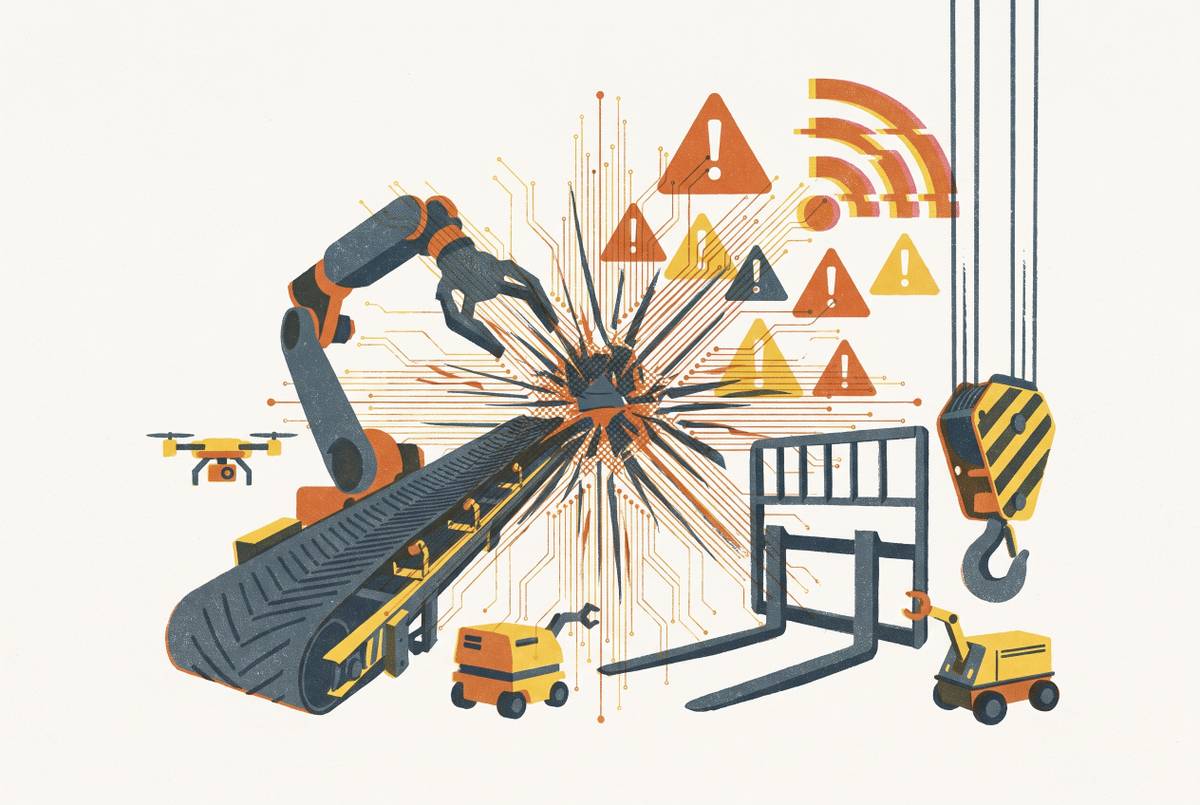
This is confident wrongness, and its consequences differ from those of a visibly failed system. An unavailable answer leaves a decision unresolved, while a plausible but incorrect answer can direct work. In asset-heavy operations, that work affects physical equipment as well as a dashboard. The information supporting an agent’s action must therefore warrant that authority even when the agent can complete the task. Without data integrity, greater autonomy expands the reach of an operational mistake.
The specific data problems that asset-heavy industries have carried for decades
These problems have been familiar for decades to those deploying enterprise asset management. Duplicated records and inconsistent naming conventions make it hard to tell which record is for the equipment being discussed. Missing asset relationships remove the connections needed to understand the consequences of work. Outdated criticality ratings distort priority, while poor failure coding weakens the history on which maintenance judgments depend. Agents inherit these defects together rather than encountering them as separate cleanup projects.
Getting asset relationships right matters most for safety because equipment cannot always be treated on its own. A system must show which assets are connected, which equipment must be isolated before work starts, and which site constraints apply. Without those relationships, a recommendation can be reasonable for an individual asset and unsafe in its operating context. Criticality adds another layer of meaning by distinguishing work according to its operational importance. An outdated rating hides that difference, though the recommendation still looks as if it rests on sound judgment.
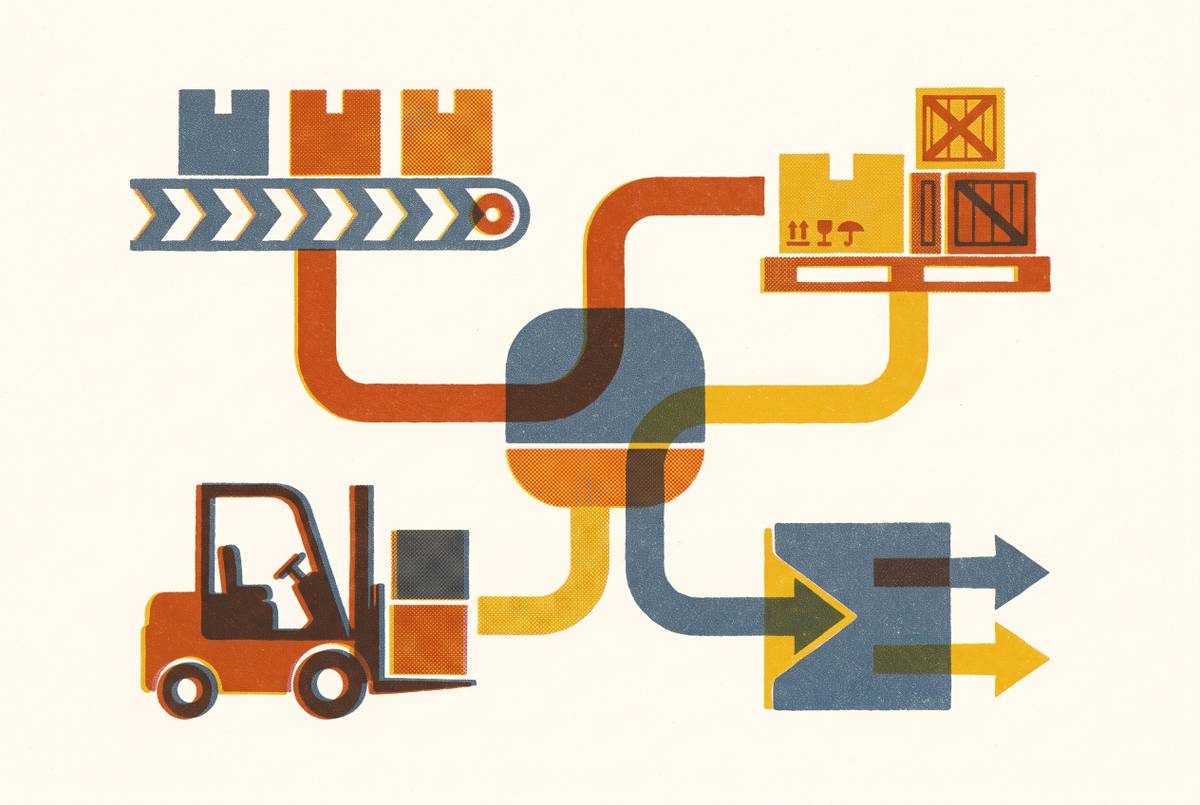
IBM’s AssetOpsBench research identifies the need to combine time-series sensor readings, textual inspection records, work orders, operational logs, and images. These sources describe different aspects of the same operation, so access to one does not substitute for access to the others. In manufacturing, an agent unable to see across ERP, MES, quality, and logistics systems answers from a partial view. Integration depth limits what the model receives and can reason about.
Why construction and capital project environments make the data problem harder
Construction and capital projects add fragmentation across tools, trades, and phases to these established problems. A process audit of a California landscaping commercial company found that it used HubSpot for sales, kept Excel schedules on internal servers, and had separate estimating and financial software. Project managers and superintendents manually bridged the gaps between them. The company had tools, but those tools did not function as one connected system. An agent using only part of that environment would lack the coordination that people supplied outside it.
RFI logs without required fields, including due date and owner, cannot reliably support aging, follow-up, or linkage to the programme activity being blocked. Delay risk then becomes a matter of opinion, leaving an agent without usable evidence. Procurement and energization readiness also depend on how well trades, vendors, and owners work together. Long-lead equipment, phased energization, and commissioning dependencies place MEP long-lead risk in both the approval chain and the factory.
Compliance records can also hold evidence that teams cannot use. Subcontractors upload records inconsistently, and evidence may be disconnected from installation stages, leaving delivery teams to locate and validate it. Planning records have a different limitation that is equally important for agents. P6 schedules and similar tools show what people plan to do, which can differ from what happens in the field. An agent relying on schedule data alone can optimize a plan without establishing whether actual site conditions make it executable.
What happens when agents act on bad data in multi-agent systems
A mid-market company deployed an agent-based procurement system in which attackers compromised the vendor-validation agent through a supply chain attack. False approvals then cascaded downstream, and the system did not detect the fraud until inventory counts fell. By that point, fraudulent orders worth millions had been processed.
Orchestrated pipelines make this propagation a central deployment concern. A procurement agent’s error can pass to a production scheduling agent and then to a logistics agent, with each acting confidently on the preceding output. What began as one incorrect decision can become a supply chain or operational disruption that takes weeks to unwind. The error is no longer contained within the task where it originated. Evaluating each agent separately therefore cannot establish that the combined workflow is dependable.
The governance gap makes that architectural risk harder to control. Deployment can fail when audit logs are missing, ownership is unclear, or data readiness is poor, even if the model works well. A downstream answer still needs to be checked even if the upstream agent has done its assigned task. IBM’s AssetOpsBench research formalizes how to evaluate collaboration among specialized agents across industrial data modalities. It reveals systematic failure modes at the intersection of agents that are not visible when a single agent is evaluated in isolation.
What data readiness actually requires before agents are deployed in these environments
Data readiness begins with asset relationship integrity. Asset hierarchies, connections, criticality ratings, and work order records form part of the operational control layer. Enterprise asset management therefore shapes what an agent can access, which processes it must follow, and what evidence supports its recommendations. Accurate individual records are necessary, but they are insufficient when the relationships between those records are wrong. The foundation must represent how equipment operates together and where work requires isolation or other safety constraints.
The next requirement is a complete operational view across the systems relevant to the decision. A maintenance recommendation depends on asset condition, criticality, recent failures, connected equipment, available parts, safety procedures, crew availability, and downstream operational impact. Missing context in any of these dimensions can change the appropriate action. Calling one application clean therefore leaves data readiness in doubt when the decision still needs information from elsewhere that has yet to be connected. The data model must cover the work being decided across the boundaries of the application hosting the agent.
Industrial agents need to synthesize time-series sensor data, text, images, and structured work-order records rather than treating one format as a sufficient account of the operation. IBM’s AssetOpsBench uses a database-backed IoT environment and over 140 human-authored natural-language queries grounded in real industrial scenarios to evaluate this capability. Its industrial focus matters because evaluation methods from digital knowledge work do not simply transfer to asset operations. Access and evaluation must reflect the evidence that the task actually requires.
Finally, the audit and governance layer must define accountability and the limits of autonomy. Audit logs, clear ownership, and explicit human approval points must be in place as part of readiness before deployment. The NIST AI Risk Management Framework offers a voluntary structure for incorporating trustworthiness throughout an AI system’s lifecycle. In environments where safety, compliance, and service reliability intersect, human oversight at critical decisions is appropriate design. Agents should support those decisions before receiving authority to make them autonomously.
How process auditing reveals data readiness gaps before deployment begins
Begin with a specific, painful process before developing a platform strategy or broad transformation roadmap. Looking closely at that process shows where the records stop matching the work people do. The California landscaping company’s audit found gaps in integration among its existing tools. The manual bridges its managers and superintendents supplied between systems defined the gaps an agent would inherit unless the process changed.
An audit must therefore trace how existing records flow through the process. It must examine whether records connect across systems, whether required fields are enforced, and whether the data model reflects operational reality. This shifts attention from the contents of an application to the evidence available at each decision. A populated record may still be incomplete for the work that depends on it. The audit’s purpose is to make that difference explicit before automation gives the record greater authority.
In construction quality verification, people on site check finished work after they receive documentation from trades, so time passes between completion and verification. An agent reading those records sees verification evidence that may lag behind the current condition of the work. A process audit exposes that gap by examining how the work is performed and how evidence reaches the system. Only then is there a sound basis for deciding what to rebuild first and avoiding acceleration of the existing broken process.
What rebuilding a process around clean data actually looks like, and why the order matters
A durable foundation comes from redesigning the process so that reliable data is an output of ordinary work. Cleaning records without changing the workflow that produced them leaves the underlying cause in place. Rebuilding the process fixes the points where information becomes incomplete, loses its connections, or can no longer be trusted. The process must include required fields, asset relationships must show how the operation works, and approval checkpoints must be in place where decisions have serious consequences. The agent then works inside that structure rather than being attached afterward as a reporting layer.
The sequence follows directly from the diagnosis. First comes an audit of the painful process, followed by identification of the points where data integrity fails. The process is then rebuilt around evidence the agent can trust, with human oversight retained where the cost of error is highest. Deployment comes after the process has been rebuilt. This order also challenges the assumption that data quality work must be an obstacle to rapid deployment, because it concentrates effort on the specific process and its actual constraints.
Results are concrete where operational foundations exist. Danfoss automated a large share of the decisions in transactional order processing, while Suzano reported that queries for materials data took far less time. These examples point to the value of reliable foundations rather than model sophistication alone. They do not remove the need to establish whether a different workflow has comparable readiness.
An agent placed over a fragmented workflow inherits its blind spots and can give them greater operational force. An agent deployed within a rebuilt workflow has a firmer basis for supporting decisions because the evidence and controls are part of the work itself. Data quality is therefore not a finishing step in agent deployment. It is a property of the process that must be established before confident action becomes autonomous action.