Why Facility Operators Who Reject Platform Pitches Still Get Stuck Without a Process Entry Point
Turning down a platform leaves handoff gaps open; audit one process instead.

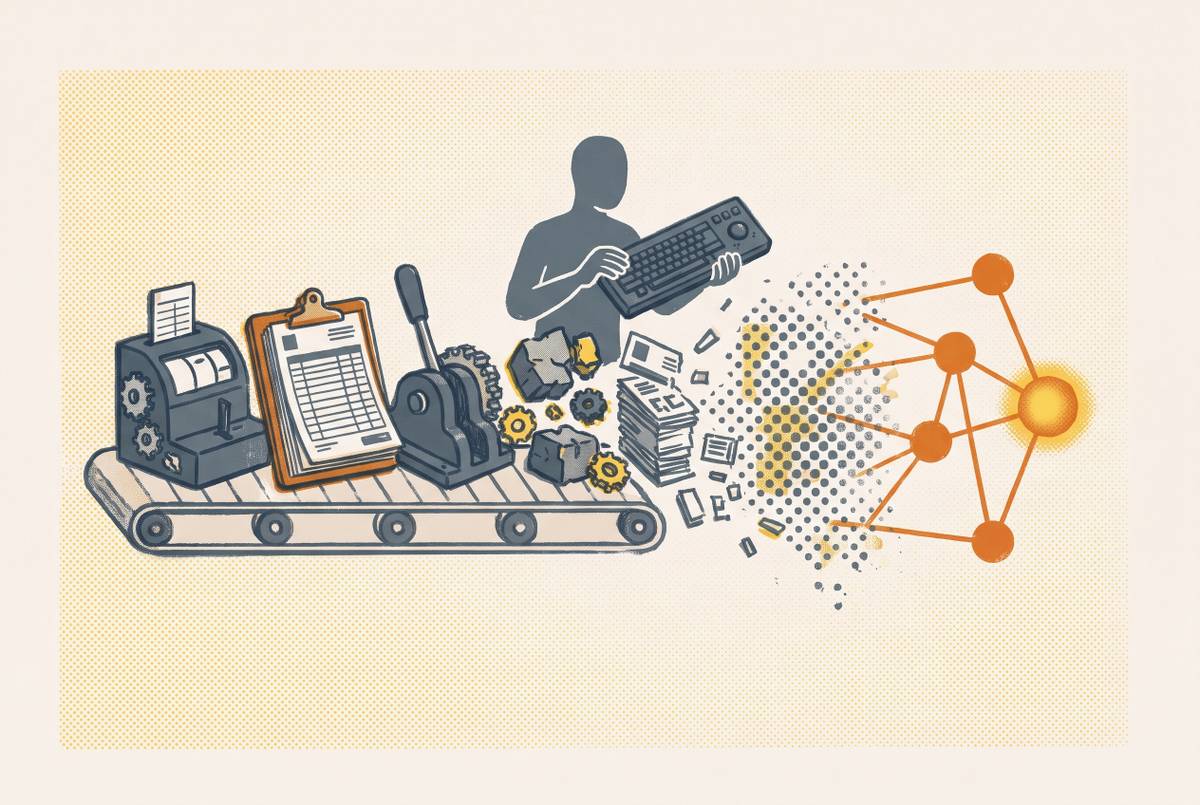
AI operations transformation in asset-heavy industries can start before there is a platform strategy or a digital roadmap. Work begins with one painful process with a measurable handoff failure, audited as it actually runs and rebuilt around the gap between signal and action. Rejecting a platform pitch can be the right decision, but it leaves that work undone.
Why rejecting a platform pitch leaves the underlying process gap open
An operator walks out of a vendor demo, declines the platform, and feels the decision is settled. The skepticism is defensible. A broad software proposal may offer little assurance that scheduling, procurement, and field execution will coordinate better after implementation. Yet those teams go back to the same handoffs, with the same missing context and manual reconciliation.
The distinction is easy to miss because rejecting an unsuitable proposal feels like resolving a problem. In practice, it resolves a question about the proposed supplier. The operator has avoided one commitment without defining another. That leaves the existing workflow in place by default, including the human effort that keeps its gaps from becoming visible until delivery pressure rises.
What the platform pitch correctly diagnoses, even when the solution is wrong
Fragmented tools, broken handoffs, and stale data are recurring features of platform pitches because they are real sources of operational pain. Estimating, scheduling, field reporting, safety, quality, and procurement can each operate through separate tools, data models, and logins. Integration is brittle and incomplete. As information moves between them, teams copy the same data, use different definitions, and lose the context they need to understand a change.
The Suffolk/MIT white paper documents fragmentation in construction project delivery and identifies AI-enabled levers across design automation, offsite manufacturing, permitting, scheduling, skilled labor, and procurement. Its focus is on delivery improvement rather than a detailed inventory of tool-level incompatibilities. That distinction is important to the diagnosis. A dependable operational picture depends on the work connecting the systems in use.
Project staff fill the gaps by exporting spreadsheets, reconciling versions, and entering the same information again. This is structural overhead. It exists because the process depends on people to reconstruct information that does not survive the handoff intact. A promise to unify operations therefore addresses a genuine need, even when the proposed purchase cannot resolve it. Rejecting the purchase does not make that need disappear.
Waiting is a workflow decision, and it defaults to the broken manual process
Deferring a process decision commits the organization to its existing workflow for another planning cycle. That commitment has an operating cost. Duplicated entry consumes time, unclear ownership leaves handoffs exposed, and manual reconciliation slows the response when field conditions change. As projects grow more complex and pressure to deliver rises, people have to do more work to make up for those weaknesses.
The comparison is therefore not between an expensive implementation and a cost-free delay. It is between integration cost and fragmentation cost, with different timing and visibility. The first cost is in the proposal, where people can examine it before they approve the purchase. The latter is dispersed across ordinary work, where it is easier to treat as unavoidable.
The same white paper places this decision against decades of stagnant construction productivity, with industry fragmentation and limited technology investment among the contributing factors. The baseline is not reassuringly stable. Adding AI to an old workflow may leave its structure unchanged, since the same coordination steps can sit between better tools. For operators, the accounting question is whether the cost of preserving those steps is being considered as seriously as the cost of changing them.
Where the fragmentation cost concentrates in facility delivery
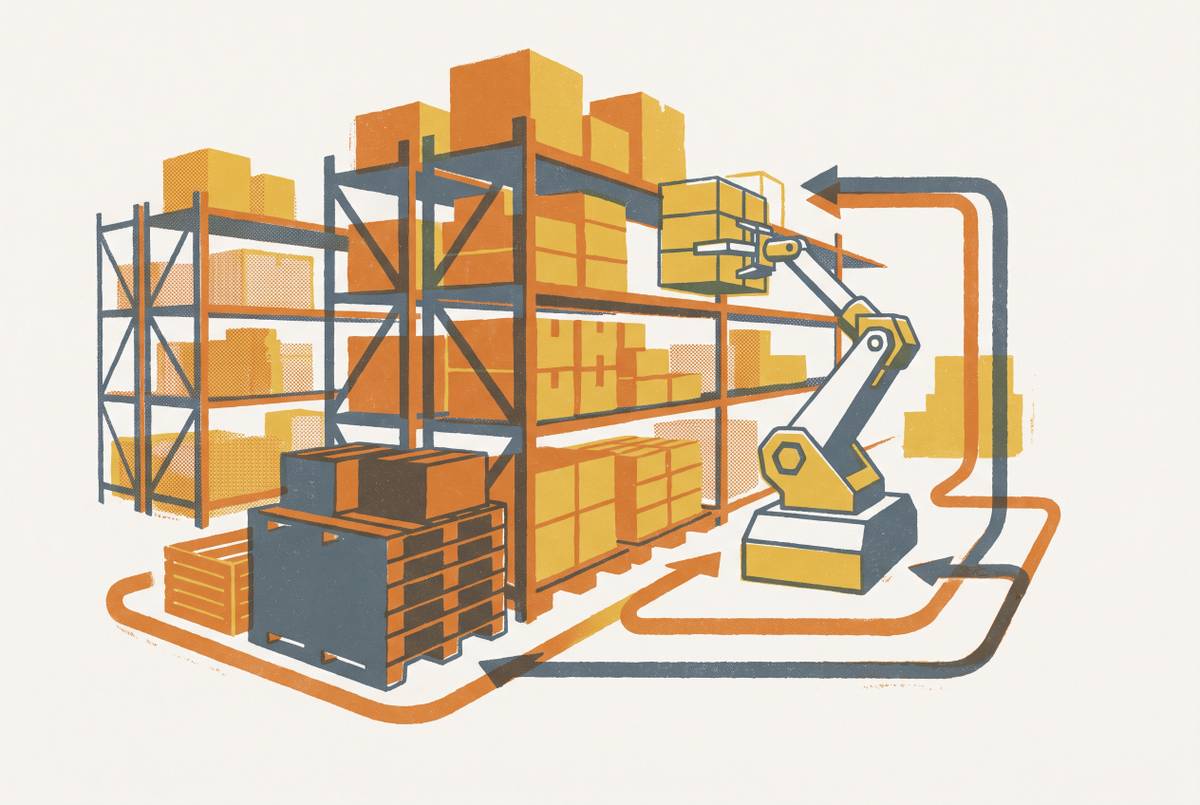
In facility delivery, fragmentation is especially consequential where procurement lead times meet energization dependencies. Transformer and switchgear procurement can decide whether the planned delivery sequence can still happen, with stakes that go beyond finishing a purchasing task on time. These are critical-path development risks. A signal missed early in procurement can cause months of schedule slip that teams cannot make up later.
Land control, zoning support, and tenant demand do not resolve that dependency. Electrical equipment must arrive on a timeline compatible with energization, with commissioning following the necessary equipment milestones. The sequence is not interchangeable. A CPM schedule can express the intended dates without proving that procurement conditions support them, so schedule integrity depends on a process that reconciles those two views.
Harkins Builders illustrates the gap directly. The schedule said one thing, the procurement data said another, and no process existed to reconcile them before the slip became irreversible. The failure was not simply that one team held an inaccurate date. It was the absence of a working connection through which conflicting information could change the delivery plan while a response was still possible.
The white paper identifies both among its six AI-enabled value levers and argues that gains compound when workflows are redesigned to connect them. Improving each team's tools in isolation leaves the dependency unresolved. In facility delivery, an operational signal has to reach the next process in time to change the decisions made there.
Why process auditing reveals a different problem than the one operators think they have
Operators often recognize the coordination problem without having an accurate account of where it occurs. They may understand the documented workflow while remaining unfamiliar with how people carry it out under pressure. Those are not necessarily the same process. An approval can exist but function as a formality, while a scheduled reconciliation can proceed without anyone investigating the differences it reveals.
Offline activity makes the distinction harder to see. A system control may seem to govern a handoff even though users often go around it to keep work moving. Redesigning from the control's documented existence preserves an assumption that operating evidence would challenge. The resulting workflow may look more complete while inheriting the same unexamined exception path. Automation then accelerates activity without repairing its basis.
The audit therefore needs evidence of execution, including cycle times, exception logs, SLA breaches, ownership gaps, and manual overrides. Each reveals a different aspect of failure. Cycle times show where work slows down, while exceptions and overrides show where the formal route fails to fit the work people do. Ownership gaps show where a signal can arrive without anyone being responsible for acting on it.
Construction progress reporting makes the stakes concrete. “Percent complete” in a daily report does not reliably match the Schedule of Values, leaving declared progress and the operational state out of alignment. Before AI can help connect decisions, the audit must establish what the information means, where disagreement enters, and how people currently compensate for it.
How do operators fix one broken process with AI without buying a whole platform?
A workable starting point is a specific, painful process with a handoff failure that can be measured. It is not a department or software category. The definition identifies where ownership breaks down, which signal arrives too late, and what a person does manually to compensate. Those details distinguish a rebuildable process from a broad aspiration to improve operations.
The audit supplies the basis for that choice. Without evidence of exceptions and overrides, many processes can seem to have an equal claim on investment, leaving no clear basis for deciding which should come first on the roadmap. Evidence narrows the scope. For example, procurement information may need to be reconciled with schedule commitments.
Operators who have watched peer implementations fail have reason to question whether connecting systems will cost more than the targeted improvement is worth. Narrow scope changes what must be integrated, because a specific process can be rebuilt without replacing the broader system architecture. The work is bounded by the failing handoff.
Identifying the entry point should take less than quarters, and a live first process should follow weeks after the audit. The diagnosis must produce a sufficiently concrete target to act on within that timeframe.
Narrow scope also differs from isolated scope. A process rebuild must connect the adjacent activities needed to remove its failure, even when it leaves the rest of the architecture alone. Otherwise, a better tool still passes work into the same broken handoff.
What the department-level transformation pattern looks like when the entry point is right
General Mills runs an AI-driven supply chain optimization system that evaluates thousands of daily shipments. It adjusts routing, timing, and vendor selection autonomously, flagging only genuine exceptions for human review. The coordination layer is the significant change. Rather than requiring people to mediate every movement from information to decision, the redesigned workflow reserves their attention for exceptions.
The case illustrates a structural pattern rather than a general claim that AI improves logistics. A defined operational process connects a signal to an action, and the manual coordination step between them is removed. That is more specific than accelerating analysis. Faster information alone would leave the old delay intact if people still had to reconcile it and transfer it into the next decision.
For facility operators, the analogy is the handoff. Procurement and energization readiness involve different work, but producing information still differs from putting it in a form the next process can use. Operators need to identify where coordination latency originates.
A department-level transformation can therefore begin with a process smaller than the department itself. Its significance comes from changing how work moves. The result must be judged by how well it fixes the failure found, such as delay, exceptions, or manual intervention. Once that connection works, it provides a foundation for the next process rather than requiring an enterprise-wide commitment at the outset.
What operators who have already said no should do with the gap they still have
For the operator leaving the vendor demo, the next move is to name the process that made the pitch attractive. The skepticism needs to be followed by an audit of actual execution, focused on the handoff causing the greatest pain and the evidence showing how it fails. Tool evaluation comes after that diagnosis.
Approvals treated as formalities, reconciliations that ignore differences, and offline workarounds are evidence. They show how the process works beneath what is written down. That is the process a rebuild must address if it is to remove coordination work.
A wider transformation sequence may emerge from this work, but it does not have to precede it. The white paper identifies design automation as the clearest upstream enabler of its other five delivery levers. That industry-level sequence is not a substitute for evidence about a particular operator's immediate failure. The starting point still needs to be specific enough to connect responsibility, information, and action.
An operations firm that begins by having operators show exactly how work runs today, and where it hurts, follows a more useful sequence than one that begins with tool selection or a roadmap. The first commitment is to understanding the failure. A rejected platform proposal leaves a gap, but that gap has a name. Finding that name is the work.