AI Workflow Redesign in Retail Replenishment Operations
Rebuilding replenishment as one system, not a better forecast, fixes stockouts.
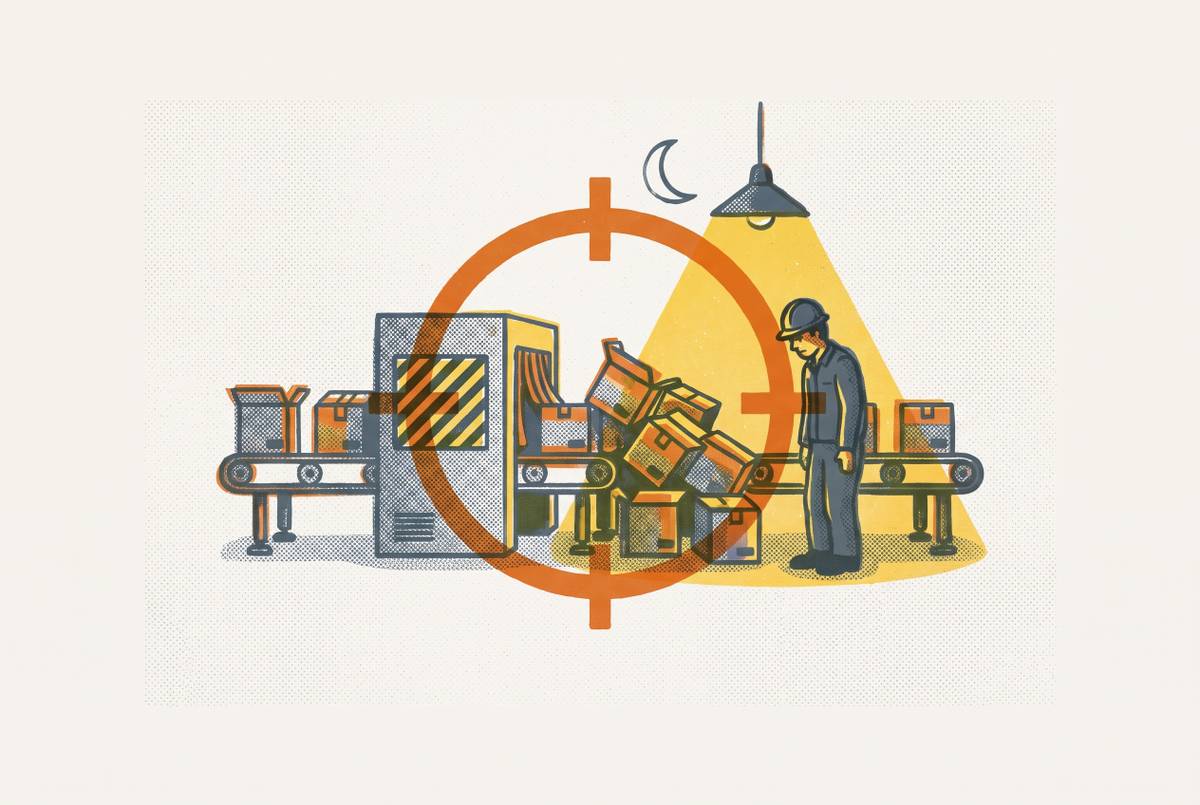
When an operations leader upgrades the forecasting model, the accuracy metrics on a dashboard somewhere improve, but six weeks later the stockouts and overstock patterns on the floor look exactly the same as before. The core failure in retail replenishment AI is not a model quality problem but a workflow architecture problem, and that gap between model performance and operational outcome is the real subject here. The process underneath forecasting improvements still runs on siloed, sequential, batch-driven logic, so those improvements cannot compound.
Legacy replenishment asks one question: what should be reordered? It answers that question with a static reorder list, generated on a schedule, handed down a chain of systems that don't talk to each other in real time. That question already assumes a structure, and no amount of AI applied from outside that structure can fix it. The architecture produces the whole problem: demand sensing, allocation decisions, and execution actions get handled by separate systems pulling separate data on separate schedules, so any AI layer dropped on top sits between disconnected steps rather than inside the process that connects them.
Enterprise practitioners rebuilding these systems have converged on the same conclusion. The strongest outcomes come not from isolated forecasting models but from an AI-enabled operating structure that links demand sensing, replenishment planning, procurement workflows, and execution monitoring into one system. That's the line between digitized retail and AI-native retail. Digitized retail uses technology to do the same things faster: the same reorder list, generated by a faster algorithm, still handed down the same broken chain. AI-native retail changes how the business actually runs inventory, pricing, and fulfillment because the workflow itself gets rebuilt. The sections that follow work through what that rebuilt architecture requires, where the old workflow breaks in practice, and how to deploy it without tripping the most common failure modes.
What the old workflow looks like (and where it breaks)
Legacy replenishment doesn't fail because its tools are weak. It fails because the workflow it runs on was designed for periodic, batch decisions, a structure that holds up fine under stable demand and falls apart under the conditions modern retail now runs on by default: omnichannel demand spread across channels that don't share inventory visibility, localized assortment that varies store by store, seasonal swings, promotions that distort the demand signal for weeks at a time, supplier lead times that shift without warning, and labor constraints on the floor that limit how fast any recommendation can actually get executed.
The first: when system constraints, like DC capacity limits, order multiples, and lead-time windows, aren't loaded into the planning system, the recommendations it generates exceed what operations can physically execute. Planners see a suggested order that ignores a capacity limit everyone on the floor knows about, and they stop trusting the system within a matter of weeks. The second: forecast logic and allocation logic often run off different data pulls entirely, so a store can receive a replenishment recommendation that directly conflicts with an allocation decision already in motion, shipped and in transit, before anyone notices the two systems disagreed.
The deeper problem is structural. Because the workflow runs sequentially rather than concurrently, forecast first, then allocation, then procurement, then execution, each handed off like a baton, AI can only improve one leg of that relay at a time. It can make the forecast more accurate. It can't change the fact that the forecast, the allocation decision, and the execution action are running on different clocks, informed by different data, reconciled only after the fact. That architectural gap, demand sensing, allocation, and execution split across separate systems on separate data pulls, is exactly the kind of broken workflow that no forecasting layer bolted on top can repair. Rebuilding replenishment as a unified, AI-native system means redesigning the operational workflow end to end, not patching the one already in place, and that distinction between digitized and AI-native retail is what makes a process audit of how replenishment actually runs today the necessary first step before anyone decides what to rebuild.
What a rebuilt replenishment architecture requires
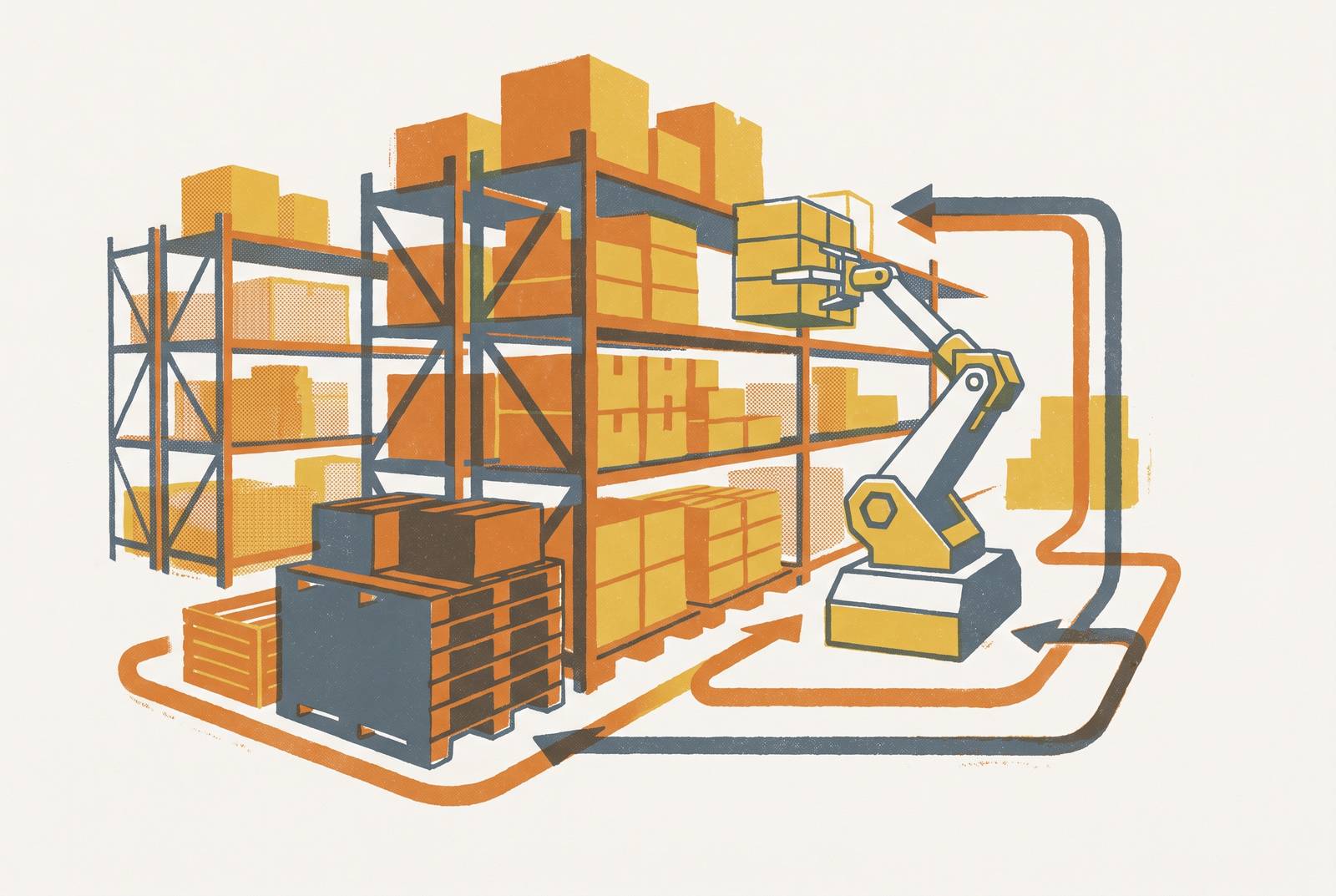
A rebuilt replenishment workflow runs demand sensing, allocation logic, and execution actions through one AI-native system, so you stop passing them hand to hand. It operates as a concurrent, continuously updated decision system instead of a sequence of handoffs, and that single change is what separates a rebuilt architecture from a faster version of the old one.
Four layers make up the reference architecture. The data layer ingests inventory positions, sales history, in-transit stock, open orders, and outside signals, promotions, weather, local events, continuously, rather than on a batch schedule that goes stale the moment it's pulled. The integration layer connects to ERP, WMS, POS, and procurement systems through APIs, so data moves continuously instead of waiting on scheduled exports that might run once a day or once a week. The intelligence layer runs machine learning models that combine probabilistic demand forecasting with allocation logic at the SKU, store, and week level, and they work off one shared demand signal instead of two forecasts generated separately and reconciled later. The decision and execution layer turns model output into operational action: routine approvals get handled autonomously by AI agents, and anything higher-risk gets escalated for a person to review.
AI workflow orchestration is what ties these four layers together in practice. It routes recommendations into replenishment, procurement, and exception management processes, connecting predictions to actions, approvals, escalations, and monitoring, so AI becomes part of the daily operating rhythm rather than a reporting layer someone checks after the real decisions already got made elsewhere. When you coordinate demand signals across one unified operations model, replenishment and allocation run off the same forecast instead of drifting apart the way they do in the old sequential setup. The sequential handoffs in legacy replenishment, forecast to reorder list to planner review to order placement to allocation to execution, introduce delay and data gaps at every single step, and no forecasting model fixes a workflow that was never built for the volatility retail runs on now. Operations teams that have rebuilt replenishment this way report that the architectural change itself, moving from batch-cycle to concurrent decision-making, delivered more value than any single forecasting upgrade on its own, which is the reason the starting point needs to be one specific, painful process rather than a broad technology strategy.
The calibration differs by product type, though the architecture doesn't. Take short life cycle products, seasonal apparel being the clearest case: they live or die on getting the first distribution right, and style chaining and clearance consolidation are the variables that matter most. Long life cycle products, grocery staples, hardware, depend on steady replenishment accuracy and safety stock levels tracked against demand that plays out over years, beyond a single season. The four implementation phases apply to both categories identically. What changes is the pilot category chosen, the constraint set loaded into the system, and where the autonomy thresholds get set, which is the question the next section takes up directly.
How autonomy thresholds and governance prevent the rebuilt workflow from breaking differently
A rebuilt architecture doesn't remove human judgment from replenishment. It moves human judgment to a different point in the process, and setting that point wrong is the fastest way to lose the operational trust the rebuild was supposed to earn.
Call it the override paradox. A system that only recommends and never acts leaves every single approval sitting on a person's desk, defeating the purpose of rebuilding the workflow. If you set auto-approval rules too loosely, the system releases routine decisions without anyone touching them, which sounds efficient until the rules are wrong in a way nobody catches for weeks. Automating too early, before the planning team has had time to build confidence in what the system recommends, costs the project the trust it needs: planners who watch a few recommendations exceed what operations can absorb stop believing the next ten recommendations, even the correct ones.
Start with autonomy thresholds set narrow, widen them only on the evidence that override patterns actually produce, and keep a manual override available on every action the system auto-approves, no exceptions. Override codes themselves are operational data worth collecting deliberately. During a pilot, planners should log each override with a reason code, because those codes show where the model is getting it wrong and where the underlying process is getting it wrong, and those are two different problems that need two different fixes.
Because agent behavior is probabilistic rather than deterministic, the same input can produce different outputs across different runs, so logging only inputs and outputs misses the information that matters. Enterprise AI agent deployment needs observability at the decision level, logging the reasoning path an agent took, not just what went in and what came out, because without that detail there's no way to tell a one-off anomaly apart from a systematic failure pattern repeating itself.
Replenishment carries a specific version of this risk that's easy to miss until it's already cost money: automating a decision automates whatever penalty is attached to it too. A supplier compliance issue that a merchant or replenishment manager would once have resolved as a one-off, a late shipment, a short count, gets handled by a rules engine instead, and it turns into a recurring, automatic deduction cycle that keeps firing until someone traces the root cause and fixes it manually. Governance, in this context, means watching the AI system the way any operational system gets watched: checking logs, reviewing the actions it took, refining the rules that govern it. The goal is control, accuracy, and trust, not scale for its own sake. Governance failure is one way a rebuilt workflow breaks. Deployment sequencing is another break point, and it tends to occur earlier in the rollout.
Where AI agent deployment fails in replenishment before it gets to governance
Most replenishment AI deployments fail because the process running underneath the architecture was never actually standardized before agents got deployed into it.
Watch for this pattern specifically: a replenishment process that can't be clearly described and documented end to end, full of informal overrides nobody wrote down, constraint exceptions that live only in a planner's head, tribal knowledge about which supplier always ships two days late or which store always needs ten extra units during a particular promotion. An AI agent deployed into that kind of process won't execute it reliably, because there's no reliable process there to execute. So the agent ends up guessing at rules that were never formalized, and it guesses wrong often enough to undo whatever trust the earlier governance work built.
Runaway loops are the concrete form this risk takes in production. An agent that hits a replenishment exception it can't resolve will try alternative approaches, retry with modified parameters, and keep retrying, burning real API cost before anyone on the team notices the loop is happening. Without decision-level logging, the danger is silent wrongness: the agent keeps producing output, the output looks plausible, and nobody catches that it's been wrong for three days until a stockout shows up on a shelf.
Three data readiness failures occur before pilot launch more consistently than any others. In-transit stock and open orders are often missing from the live feeds a model draws on, and both need to be present before a pilot starts, because a model making decisions without them is working from an incomplete inventory picture no matter how good its forecasting logic is. Historical data sometimes gets cleaned using information that wasn't actually available at the time, a common way a proof of concept produces results that look strong in testing and then fail to hold up once the system goes live. And constraint sets, capacity limits, order multiples, lead-time windows, need to be loaded into the system before any recommendation reaches a planner, not patched in afterward once someone notices the recommendations don't make sense.
Pilots that get the sequencing right tend to show early return within one to two quarters, visible in lower stockouts and better product availability on the shelf. That timeline holds only when the pilot category gets chosen for how standardized and constraint-clear it already is, not for how strategically important it happens to be. Standardize first, load constraints second, pilot third, widen autonomy fourth. Get that order right, and what the architecture can actually deliver becomes visible in weeks.
What rebuilding a replenishment operation looks like as a first engagement
The right starting point for replenishment transformation is one specific, painful process, mapped exactly as it runs today, with its break points named before anyone decides what to rebuild.
A process audit comes first, always. Before any rebuild decision gets made, the current replenishment process needs to be mapped in detail: where decisions actually get made, what data is available at each decision point, where planners override the system and why, and which constraints are enforced informally by habit. That audit tends to surface a gap between the documented process and the process that actually runs day to day, and that gap is visible in the informal overrides, the constraint exceptions nobody wrote down, and the in-transit data nobody pulls consistently, where the most consequential break points live.
From there, the move is narrow by design: one category, one region, one decision loop, rebuilt AI-native and live within weeks. Not a platform rollout stretched across the enterprise on a multi-quarter timeline. Terminal Use follows this approach directly: it starts with a process audit in which clients show how a process runs today and where it causes pain, then rebuilds that process from scratch with AI agents built into the center of it, with a first live process running within weeks. The team behind it has rebuilt operations for some of the largest engineering, procurement, and construction firms in the US, and it applies that same field-grounded discipline to retail replenishment.
A rebuilt replenishment architecture brings demand sensing, allocation logic, and execution actions together through one AI-native system, with AI agents working inside the workflow itself, approving routine decisions on their own and escalating the high-risk ones for a person to review, rather than sitting outside the process as a reporting layer bolted onto something that never changed. The pace described throughout this piece, a live rebuilt process within weeks, holds only when the starting point is narrow and specific. Long timelines, platform-first sequencing, and AI deployed as a reporting layer after the existing system has already made the decisions are the signs a replenishment transformation has gone the wrong way. The question that matters is whether the workflow underneath the forecasting model is built to let AI agents run the operation.
Sources
- Retail Rewired: How AI Is Reshaping the Retail Business Model
- AI-First Enterprise Operations: Reinventing the Operating System of Work
- Evaluation Blindness: How Silent Measurement Failures Corrupt AI Systems from Training to Deployment
- Executive Perspectives June 2026 Applied AI at its most impactful
- Agentic AI Framework for Smart Inventory Replenishment
- From Agent Failure Paths to Quantified Residual Risk: A Compositional Framework for Resilient Agentic AI