How Department Heads Use AI Agent Behavior to Surface What the Work Should Actually Look Like
Agent stalls and errors reveal the real work behind the process.
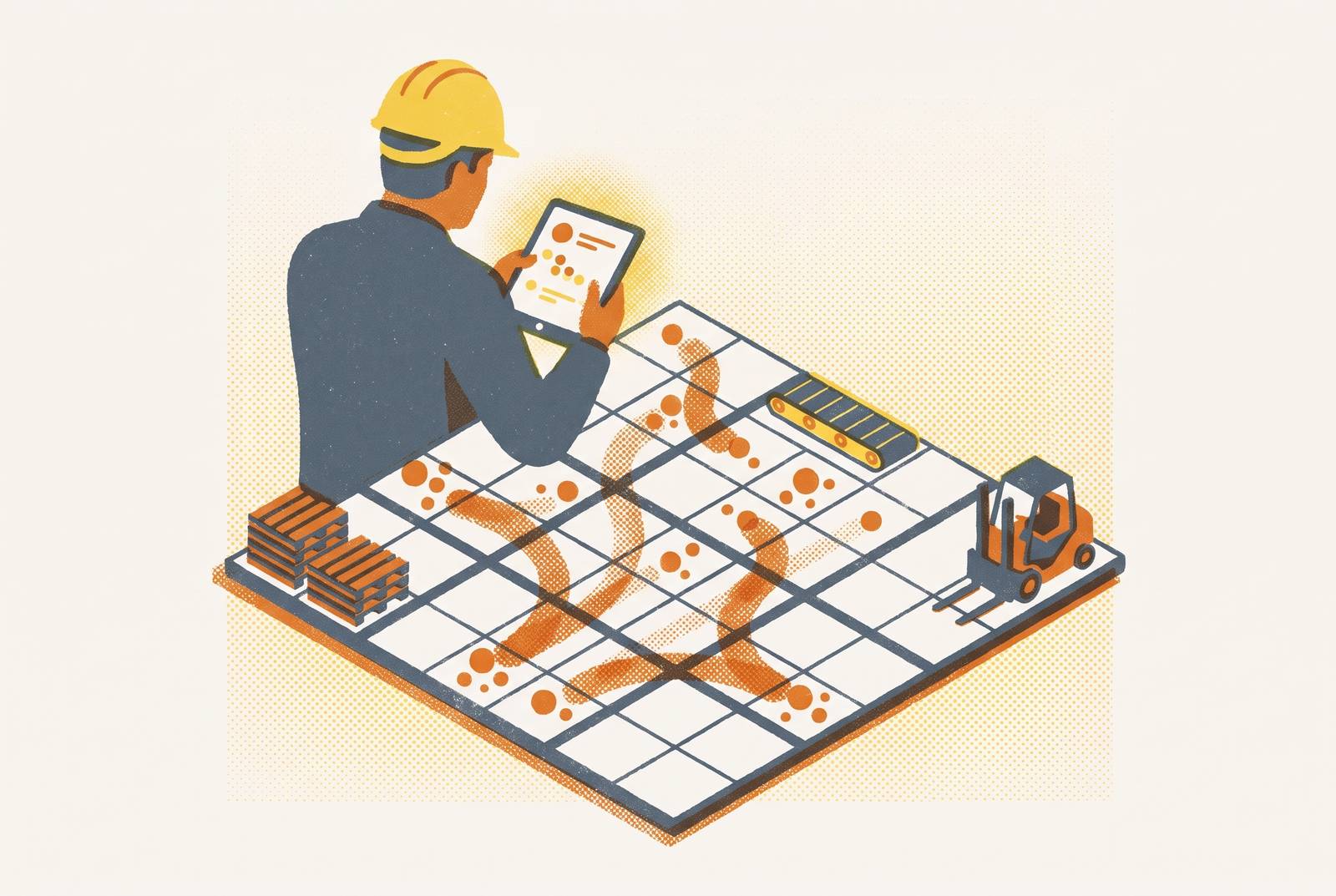
Rebuilding department workflows with AI agents from scratch starts with reading agent behavior as evidence about the work. Stalls, wrong answers, bottlenecks, and inconsistent execution reveal decisions, checks, and dependencies that the existing process leaves implicit. Department heads can use that evidence to define what the workflow should become before committing to a rebuild.
Why agent behavior inside a workflow is a process diagnostic, not a technology signal
An agent that looked capable in a demo is now escalating routine decisions or producing unreliable output in production. For the department head, the immediate frustration is that the promised improvement has become another operational problem. Yet that behavior may be the agent’s most useful contribution. It makes visible the assumptions that allowed the workflow to appear coherent while people were doing the work.
The distinction from rule-based automation is important here. A rule-based automation that fails usually stops, while an agent can keep running and produce output that looks right. Its misbehavior, rather than its silence, becomes the signal. Layering an agent onto a broken process produces a faster broken process because execution accelerates without correcting the logic underneath.
Reading that signal means connecting a specific behavior to the process assumption it exposes. An escalation may show that no one has the authority to decide, while an answer that looks right but is wrong may expose a handoff with no formal check. The agent demands that work be legible enough for autonomous execution. Where execution breaks down, the department head gains a place to investigate, rather than simply another technology defect to resolve.
Why the gap between declared process and actual process is so hard to see without an agent
Human workers keep processes functioning through undocumented workarounds, informal escalations, and tacit judgment. They know which approval can be bypassed, which input needs checking, and which decision requires an experienced colleague. Those adaptations rarely enter the official process map. Consequently, the declared workflow can remain orderly while the operative workflow depends on knowledge distributed among the people performing it.
Conventional auditing has difficulty capturing that difference because it asks people to describe the work. Their answers may describe how they believe it runs or how it is supposed to run. An agent instead attempts to execute the instructions available to it. Each point where it needs a rule that does not exist exposes a dependency that interviews can leave hidden.
ISHIR’s agentic AI analysis identifies inconsistent or undocumented business processes as an obstacle to reliable execution across departments. When teams follow different workflows and approval structures, an agent has no stable basis for working on its own. Human improvisation has been bridging that gap. The agent cannot reliably reproduce the same informal accommodations, so its difficulty makes the missing operational logic visible.
The revealing audit finding is therefore not always a broken scenario. It can be a documented automation that does not exist in practice, or an approval chain that has been bypassed for years. In those cases, repairing execution against the official map would preserve a false account of the work. The diagnostic task is to establish which decisions and dependencies actually govern execution before treating the documentation as a design specification.
What agent struggle actually looks like in practice, and how to read each pattern
Human workers were making those calls informally, but the agent has no clear responsibilities, access controls, or escalation boundaries. So at each unclear step, the agent asks for help. The department head’s investigation should connect every escalation to a decision point, identify who previously made that call, and establish the basis for it. Governance is missing, even if there is enough capacity to do the work.
The agent produces confident output that is wrong. This is the most dangerous pattern because the apparent completion of a task conceals an unreliable result. Upstream data or handoffs may be inconsistent, and people may have used their judgment to catch the errors without a formal check. Joel Fokou’s Parallax safety architecture paper notes that reliance on outdated or inconsistent information may become apparent only in real-world usage. The investigation starts by tracing the wrong output back to its input. If that reveals a pre-existing data or handoff defect, the rebuild needs to make silent human correction an explicit verification step.
The steps around the agent were never built to take in work at agent speed, so the blockage shifts to another step and still holds up the work. BCG’s agentic operations research describes the resulting shift from optimizing flow to governing outcomes when execution becomes nearly instant and capacity stops being the constraint. The chokepoint identifies the next redesign target. Treating it solely as a reason to slow the agent would leave the underlying dependency unchanged.
The agent behaves differently across teams running nominally the same process. This pattern exposes fragmentation beneath an assumed standard. Each team’s workaround gives the agent different operational logic to follow, even when management thinks the workflow is the same. ISHIR argues that operational logic, approval structures, and process rules need to be made standard before autonomous systems are brought in. In practice, inconsistent agent behavior may be the first evidence that this standardization never occurred. The investigation should compare how teams actually work, rather than judge them only by the documented version.
How this diagnostic plays out in construction, logistics, and manufacturing — where the stakes for misreading it are highest
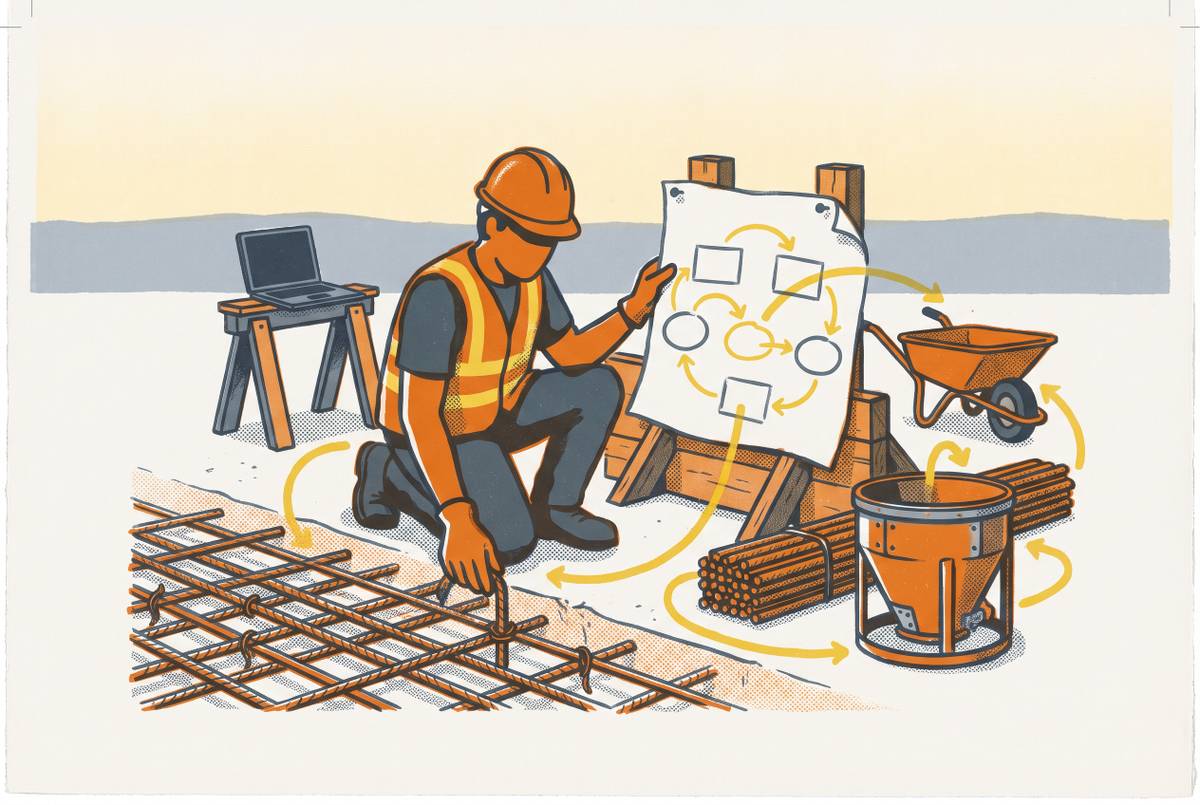
In construction, unreliable scheduling output can reveal that the schedule does not describe achievable sequencing. The declared plan may omit the constraints embedded in procurement, coordination, and commissioning data. The agent’s difficulty exposes that separation directly. Suffolk and MIT’s white paper argues that real gains from AI depend on changing several construction workflows together. A stall at one point in the sequence can therefore indicate that the upstream and downstream workflows have not been redesigned to support execution.
Energization timelines are increasingly the true critical path on hyperscale and infrastructure projects, yet declared schedules rarely model them accurately. An agent working from such a schedule can produce plans that assume dates the grid, permitting, and equipment supply chain cannot support. The diagnostic finding is a disconnect between the schedule and the real constraint data.
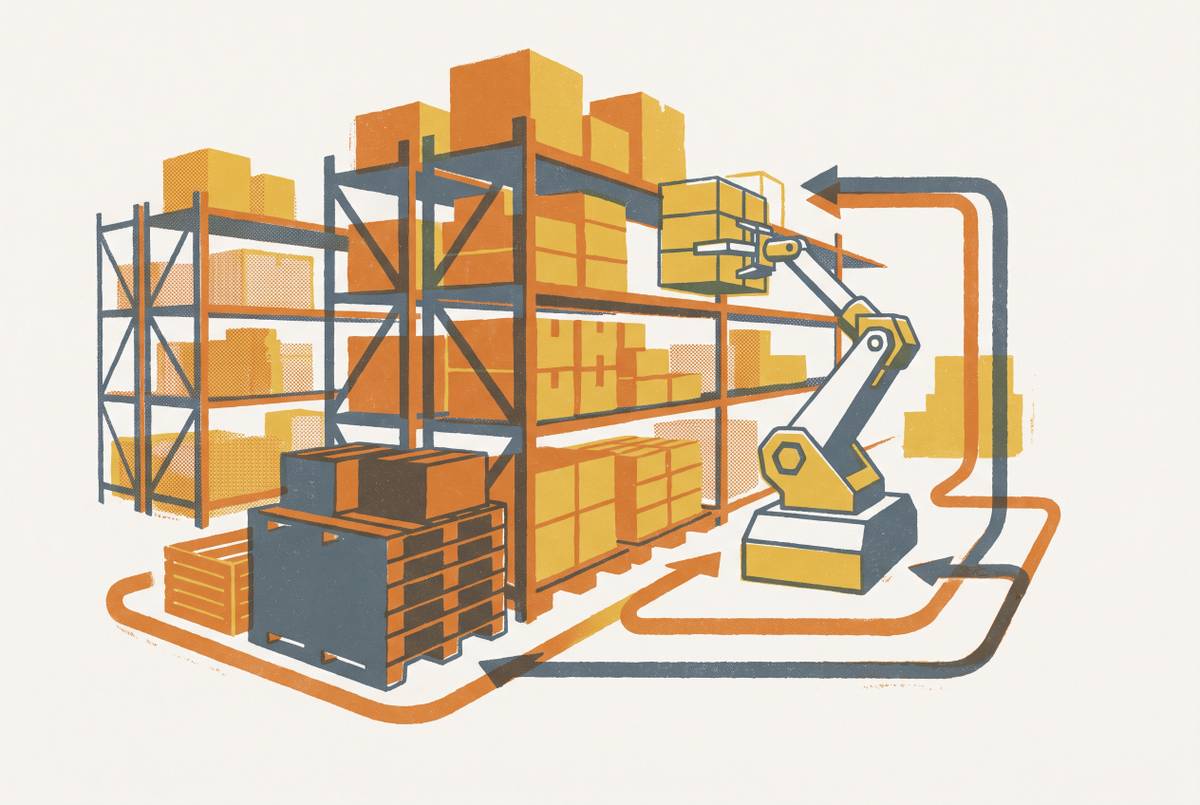
In logistics, inconsistent execution across nodes exposes process fragmentation at scale. Procter & Gamble streamlined 35 supply chain processes down to 20 through a touchless AI-enabled platform, with redesign preceding agent performance. That sequence distinguishes rebuilding the work from automating its existing variations. When an agent behaves differently across nodes, the department head has evidence of where standardization was assumed but not enforced. The department head must determine which differences belong in the process and which reflect undocumented workarounds.
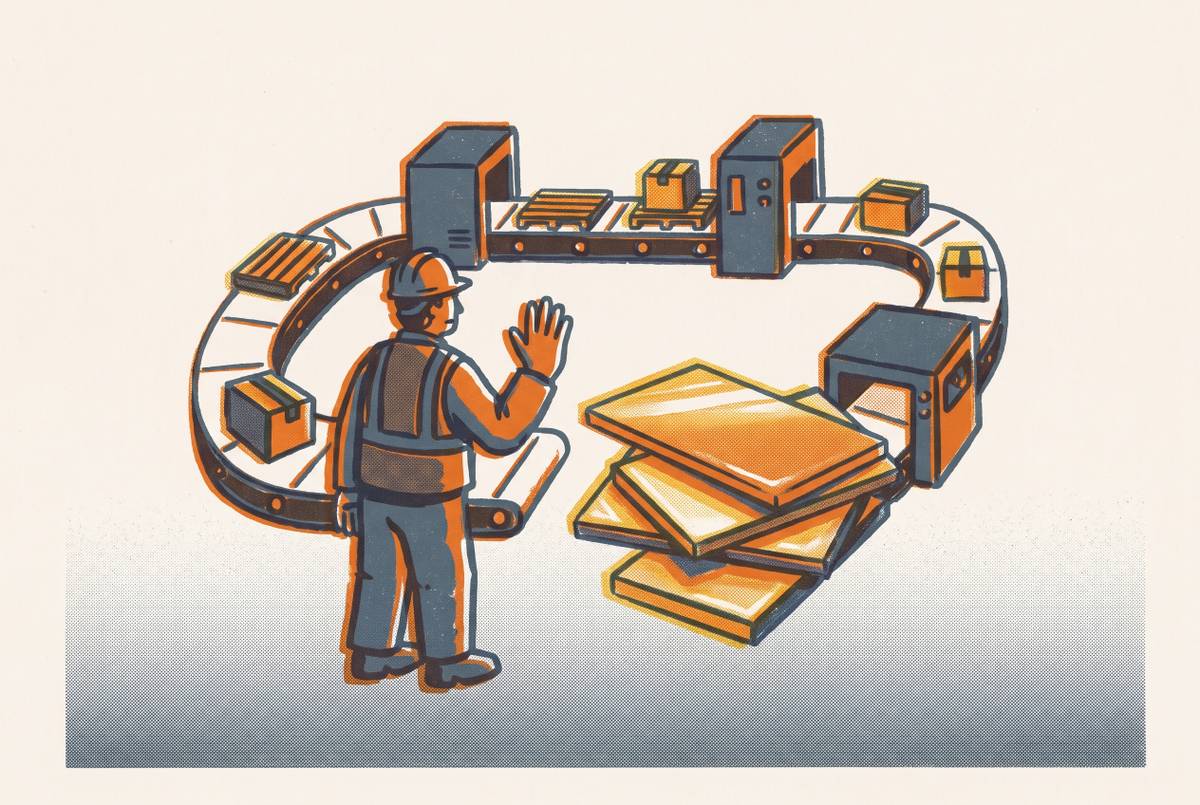
In manufacturing, the maintenance plan on paper can also differ from how failures actually happen. A predictive maintenance agent that escalates certain events and ignores others can reveal which precursor conditions the data supports as predictive. Human maintenance teams may previously have applied that knowledge implicitly. The escalation pattern is therefore a process artifact that can expose what the maintenance schedule has been masking. Similarly, a quality control agent that detects post-production defects but misses precursor conditions points toward data about outputs rather than the upstream process states that produce them.
A missing constraint, an inconsistent approval, or an absent precursor condition can represent both latent risk and lost productivity. That raises the burden on interpretation. Agent behavior provides evidence about the process, but its output cannot be accepted as a truthful process map merely because it is detailed or confident.
The objection that agents can produce a false picture of the process, not just reveal the true one
Agents can manufacture a false account of the work. This is especially consequential at rare, high-stakes exceptions in construction and mission-critical delivery. An agent may confidently encode an impossible sequence, and nobody checks because the result looks plausible. Confidence is not evidence that execution is sound. The Parallax paper notes that reliability evaluations lack standardization and that some failures emerge only in real-world use, limiting what pre-deployment evaluation can establish.
This objection changes how the signal must be read. A stall points to a decision the agent cannot make, while confident wrong output points to a claim that went unchecked in the process. The latter remains diagnostically useful once the error is identified. It reveals where hidden human verification needs to become an explicit part of the redesigned workflow.
Deloitte’s agentic AI strategy research warns that poorly designed applications can create “agentic workslop,” adding work. That extra work to fix errors shows why tasks that look complete are a poor measure of success. The process must account for verification and intervention. Otherwise, an agent can look productive while people bear the cost of making its output usable.
For that reason, the diagnostic posture cannot end with an initial audit. BCG says leading deployments use continuous feedback loops and evaluations owned at the C-level and run by integrated business-tech teams that measure how much value the work delivers. Department heads need both a distinction between stall signals and false-confidence signals and a governance structure that sustains the feedback. Without both, the organization can think the workflow is working when people keep having to fix it.
How do department heads redesign an entire workflow using AI agents instead of patching old processes?
Redesign starts with one specific, painful process. On Monday morning, the department head’s task is to establish the operative workflow around the agent’s behavior, rather than begin by repairing the documented version. The first run becomes an audit instrument. Its purpose is to expose the decisions, handoffs, and constraints that a rebuild must address before the organization commits to a new design.
That audit turns the four patterns into different redesign requirements. Escalations call for clear decision rules that name who has authority, while wrong outputs call for a look at inputs and missing verification. A downstream chokepoint determines where redesign must extend beyond the agent’s immediate task. Differences across teams show where the operational logic they use needs to be made standard. These findings belong in the new workflow’s design, rather than in a collection of workarounds surrounding the agent.
Department heads then shift from asking how to automate the current sequence to asking what the workflow would look like if built for an agent from scratch. That question separates necessary controls and dependencies from arrangements that existed because people were performing the work. The audit provides the basis for that distinction. Rebuilding from the ground up means reconsidering the sequence against observed operational requirements.
Ownership must connect that evidence to the authority to act. BCG describes a shift in who steers the process to a single agentic process owner who answers for end-to-end outcomes. Deloitte describes leading organizations managing agents as workers, with clear expectations for their work, ways to oversee it, and escalation paths. Together, those arrangements make behavior readable as an ongoing operational signal. They also keep a finding at one step from getting stuck between departments when the fix calls for changes elsewhere.
The first rebuild then supplies evidence for the next. Each agent run brings the account of how work gets done up to date and shows which painful process to tackle next. ISHIR warns that choosing the wrong starting point can create skepticism that makes future adoption harder. A diagnostic starting point makes the choice defensible through operational evidence. For a skeptical department head, the decisive question is what the agent reveals about the work, because the agent is not the product being evaluated. The process is.