How Asset-Heavy Operations Run AI Without Signing a Platform Agreement
Keep your systems of record and own the AI layer above them.
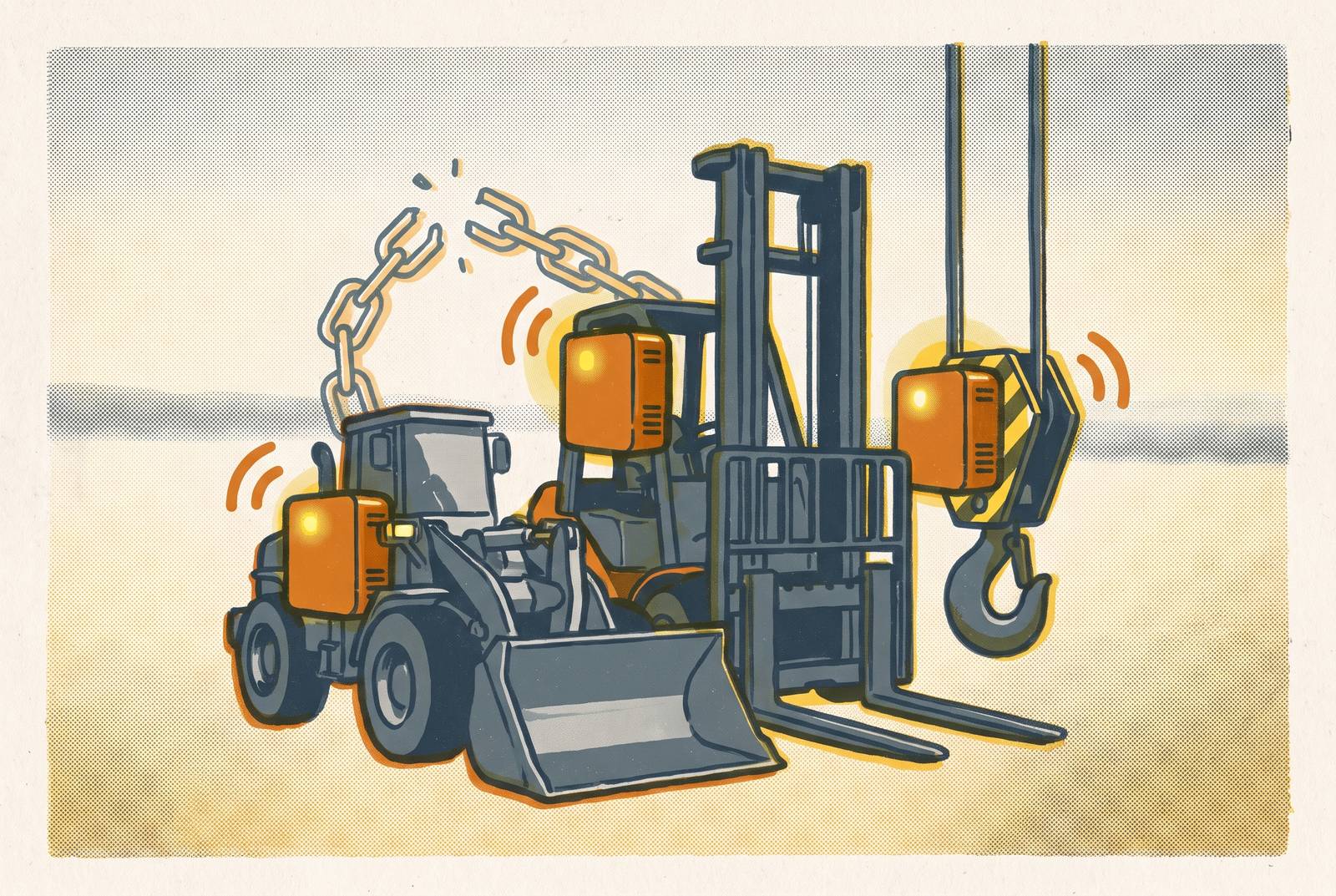
Asset-heavy operations can use AI to fix one broken process without buying a platform or first committing to an enterprise software strategy. The practical approach is to run an owned agent layer above existing P6, TMS and ERP systems, with portable logic, documented interfaces and enforceable exit rights. The systems of record stay intact, while the operation retains the intelligence built around them.
Why asset-heavy operations face a different kind of lock-in than other enterprises
A construction project loses its schedule-risk agent while work is underway, or a logistics desk loses its exception-routing logic during a disruption. The underlying records may still be available, but the operation has lost the mechanism that identifies deviations and brings them to the right person. This is not simply a missing software feature. Unlike a sales team that loses a CRM-embedded AI tool, these teams face a failure in their work with no graceful degradation.
The exposure comes from where the AI sits. In construction, logistics and manufacturing, agents work directly above the systems that control schedules, shipments and production. They become more valuable through fine-tuning on operational data, the training history they build up and integrations that become part of daily work. As those dependencies deepen, replacing the AI becomes more difficult than replacing an application with an exportable database.
Control over exception handling is especially consequential. When a manufacturing sensor returns an anomaly or a schedule agent encounters an edge case, the resolution logic determines what happens next. If that logic lives inside a vendor’s black box, operators cannot independently audit, improve or migrate it. A pricing change, service deprecation or acquisition can then reshape operating costs and continuity without breaching the agreement.
What platform agreements actually transfer to the vendor when you sign them
The relevant assets are the trained model, the workflow logic and the integrations connecting the agent to operational systems. A platform agreement can give the vendor control of all three, though the exact rights depend on its terms. Hosting and ownership are not identical. The risk comes when the enterprise cannot take versions of these assets that it can use elsewhere, whoever owns the underlying data.
For the trained model, that restriction concerns the weights, including any fine-tuning on operational data. When those weights remain on vendor infrastructure without portability rights, the enterprise cannot independently retrain them or move them inside its network perimeter. For workflow logic, the restriction concerns the decision architecture. The sequence through which an agent reads a sensor anomaly, queries ERP, drafts a remediation and routes it for approval may exist only as configuration in the vendor’s runtime. Ending access to that runtime also ends access to the usable workflow.
Commercial dependence follows from that technical dependence. An operation without a workable alternative has little leverage when pricing changes, even if its original data remains exportable. Integration debt makes the exit harder still. A P6 connector, TMS webhook or ERP lookup documented only in proprietary formats becomes another dependency to reconstruct during migration. Each undocumented connection makes it harder to know how long a future deployment will take and what it will cost.
How to use AI to fix one operations process without buying a whole platform
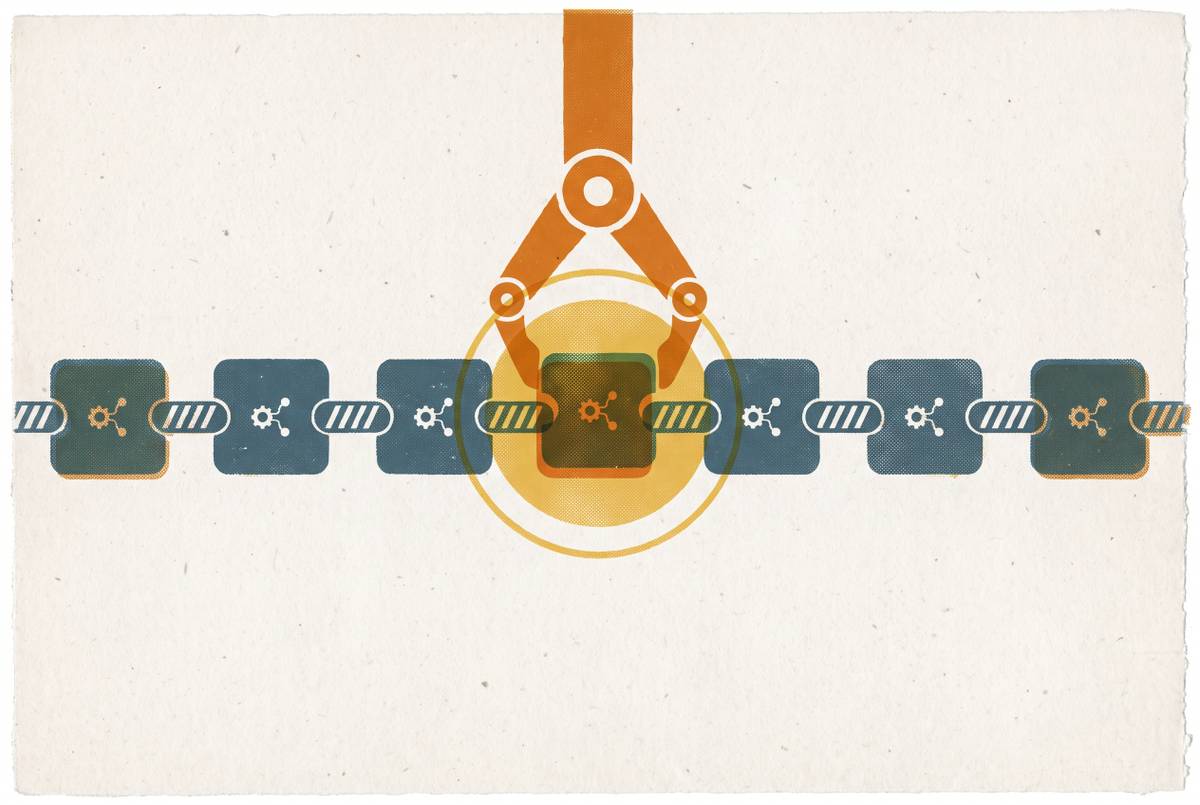
The architectural principle is to separate the agent layer from the systems of record. P6, the TMS and ERP continue to govern their own data, while agents read and write through documented interfaces. The agent does not become the record keeper. Its schedule analysis, procurement queries and alert-routing logic can therefore be audited, modified or migrated without replacing the systems underneath.
OCI-compliant containers and Kubernetes provide a consistent environment across compliant infrastructure, allowing deployable components to move intact. Model Context Protocol, or MCP, works at a different boundary, giving agents, tools and data sources a vendor-agnostic interface through which to connect. Anthropic’s announcement places MCP under the Agentic AI Foundation, a directed fund of the Linux Foundation. Connectors using the standard can work across model providers and orchestration frameworks that support it.
Model independence also needs an operational fallback. An abstraction layer can route requests across models, with at least one local or on-premises model kept ready as an alternative. That alternative must be tested before it is needed. Source-code delivery and IP transfer also give engineers control by letting them check and change agent decisions while security teams put the system inside the company’s network perimeter.
Governance binds these technical choices to operational authority. It must track each agent’s model, data access and activity no matter who provides it, using that record to assess safety. Dependency reviews should run quarterly and after any material vendor change. People retain responsibility for decisions, and the organization retains a contingency plan for the tools supporting them.
How this architecture applies to construction schedule intelligence built on P6
Where P6 is the contractual schedule artifact, it must remain the system of record. An agent can ingest that schedule, stress-test assumptions and surface sequencing risks without becoming the authority over it. The project team makes every decision. Findings return to the team, while the schedule itself stays in P6.
The agent’s contribution is optioneering and risk analysis that the manual forward-backward pass cannot explore in time. Its logic runs above P6, so changing the underlying model need not change the P6 file. That boundary preserves the contractual artifact while allowing the analytical layer to evolve. The procurement limit remains important, however. For engineered-to-order items, surfacing a risk is not a substitute for the procurement judgment needed to assess it.
Commissioning adds another set of dependencies to analyze. AI data-center construction demand is reshaping the industrial construction market, making the links between utility milestones, electrical labor, long-lead equipment and commissioning dates especially relevant. An AI-infrastructure scenario model can connect those inputs to the master schedule with explicit confidence bands. Those outputs go in the agent layer, above P6.
Procurement logs, vendor emails and field updates can show where what is happening differs from the planned sequence. Agents watch those handoffs and bring discrepancies to the project team. They do not need to displace any individual source system to identify the risk between them.
How the same separation applies to logistics desk automation without replacing the TMS
A logistics coordinator’s monitoring work spans carrier notices, terminal alerts, shipment records and shipper communications. An agent can read those signals, query the TMS for affected loads and draft updates while leaving the TMS as the system of record. The coordinator still decides on rebooking and cost.
For an exception, the agent checks alternative routing against service commitments and presents a recommended action with its evidence. That makes the approval handoff explicit rather than burying the recommendation in an automated workflow. Watching for exceptions at all times can also catch them before they become claims.
The hard limit is missing information. An agent can pull ELD and GPS pings, send status requests, parse replies and flag exceptions. It cannot locate a truck whose telematics is offline or obtain an answer from a driver who ignores messages. There must be tested human escalation paths for those cases.
With fewer regulatory hurdles than in construction or manufacturing, logistics has a better chance of using bounded automation for routine exceptions sooner. Even so, the agent must remain auditable and its fallback tested. If routing logic exists only inside a platform runtime, one vendor decision can affect the operating cost of every load handled by the desk. Owned, containerized agents above the TMS keep that logic under the operation’s control when the model changes.
How bid and proposal automation works when the agent runs on the company’s own data, not the vendor’s
A general language model that generates an industrial RFP response from its training data leaves the proposal manager with answers to redo before submission. Generic RFP tools also tend to organize reusable content rather than perform the technical work an industrial bid requires. Content reuse is not engineering review. Parsing drawings, comparing vendor data sheets against ASME or API standards, and finding incompatible clauses in specifications remain manual tasks with those tools.
The agent reads the incoming request, searches historical projects, pricing sheets, cost databases and ERP, then assembles an initial draft with a specific source citation for every line item. A human reviewer then applies judgment to technical compliance and the proposed response.
This separation also defines where the knowledge resides. Pricing history, estimating logic and the technical compliance library remain in the company’s own systems, with the agent acting as a retrieval and assembly layer. Under an owned deployment, the operational intelligence is not accumulated inside a vendor’s proprietary runtime. A model-provider change therefore calls for repointing inference.
The operational gain comes from removing retrieval and assembly labor. The same team can handle more RFP volume and improve on-time submissions, while reducing proposals abandoned for lack of capacity. Reviewers spend their time on technical compliance rather than locating figures and assembling repeated material. That gain depends on access to the company’s evidence.
What the procurement and contracting terms need to say to protect the architecture you build
A modular system can still be trapped by an agreement that withholds source code, model weights or transition rights. Procurement must protect what engineering makes portable. For an operations executive, the negotiating points are source-code ownership, data portability, model-weight access and explicit exit provisions.
The engagement should be divided into separable components, including the data pipeline, agent logic, inference layer and integration connectors. Each component can then be replaced independently of the others and of a bundled renewal. Payments and renewals should be tied to measurable operational outcomes rather than platform availability, with performance gates that justify exit when the vendor underperforms.
Multi-year commitments need concrete delivery obligations at exit. These include data in standard formats, model-weight delivery or escrow, source-code delivery for custom agent logic and set periods when the vendor must help with the transition. These provisions are negotiable in 2026 for buyers who ask for them. The agreement must also provide access to audit the organization’s agent logic and data, so governance does not depend on vendor assurances.
The cleanest resolution is an ownership model. IP transfer and source-code delivery let the company keep the system that governs its operational decisions while buying inference or other services as components it can replace.
What a deployment that keeps operational intelligence in-house actually looks like in practice
A process can be mapped in days, a first rebuilt workflow live in weeks and a department transformed in months. Because agents sit above existing systems, the work does not require displacing the tools that already function. Its scope is the broken process and the handoffs through which failures accumulate.
The deployment team begins by embedding with the people doing the work and learning how the process actually runs. That means tracing operational handoffs rather than treating the org chart as a workflow specification. Agents are then built to monitor those specific boundaries and held to the team’s standard before touching real work. Reads use documented interfaces, while writes pass through controlled outputs.
The agent takes on the labor of mapping, documenting, monitoring and flagging deviations. Judgment stays with the people who know the operation. This is a monitoring and routing layer that gives them better evidence. The system of record and its operational data remain intact as the AI layer changes.
Adoption is part of deployment. Technically correct agents can fail when pushed onto a team that does not use them. Success becomes tangible when the logistics coordinator, project controls engineer or estimator reaches for the agent because it makes the work easier. That is the test of AI operational improvement without a platform strategy.